


Choosing natural cleaning products and organic produce is often the first step into living a more conscious lifestyle. A more difficult hurdle can be seeking out safer versions of the larger things: like your furniture! With what feels like hundreds of materials and certifications out there, shopping for healthier and more sustainable furniture can be a mind-boggling experience.
Because we spend so much time on and around our furniture, finding better options for your home is one of the best things you can do for your health and our planet. Choosing non-toxic and eco-friendly furniture doesn't mean you have to sacrifice comfort or style. In fact, once you know what to look for, you’ll discover a world of better-for-you pieces that are most often higher quality and better suited for your home over-mass produced furniture.
Come along with us as we decode the process of finding safer, more sustainable furniture for your home.
Why Non-Toxic and Eco-Friendly Furniture Matters
Because we spend so much time indoors, the materials in your home – like your furniture, with its fabrics, cushions, woods, and finishes – can have a major impact on your indoor air quality and overall health.

Traditionally produced furniture is most often made with materials that prioritize manufacturing at scale for consumers with constantly shifting needs and tastes. This means pieces are made to be thrown away in just a few years, using weak wood products, low-density polyurethane cushion foams that break down quickly, non-certified fabrics, and harmful glues and finishes.
Not only are these materials a lower quality, but they can contain harmful contaminants like formaldehyde, flame retardants, heavy metals, and more. These don't just stay locked in your furniture – they off-gas volatile organic compounds (VOCs) and other noxious substances into your home. In today’s world, it’s easy to say that the abundance of these materials in your home aren’t great for the environment or your health.
The good news is, there’s a whole other side to this coin: sustainably produced furniture that uses safer (often, natural or plant-based) materials is out there if you know how to look for it. Ready to dive in?
Shopping for Non-Toxic and Eco-Friendly Furniture: What To Look For
Shopping for better-for-you furniture might feel overwhelming at first, but it's easier than you think, once you know what to prioritize. Here's a debrief of what we’ll cover:
- The Upholstery: What you lounge on all day matters. Upholstery comes into direct contact with your skin — and sometimes the mouths of children — so, it deserves proper attention to ensure you’re bringing something safe and durable into your home.
- The Stain Repellants and Treatments: We all want that oomph of protection from everyday spills and messes, and while they can keep your furniture looking fresh, not all of these are best for your health.
- The Cushion Fill: The unsung heroes of sofas and sectionals, well-constructed cushions can keep your furniture looking fresh for decades, and some options are better than others.
- The Wood: Your furniture’s skeleton is what keeps your piece strong for years to come, so, being selective in this foundation really counts.
- The Glues and Finishes: Even the smallest components deserve our awareness.
Materials and their Certifications

The Upholstery
Your fabric choices matter greatly, as you and your family will be lounging on your sofa for many years, coming into direct contact with your furniture’s fabric. There’s a lot to keep track of these days: terms like PFAS, PFOAs, VOCs, stain-resistant treatments and flame retardants get thrown around often, and it can be hard to know what to focus on.

Natural upholstery made from materials like cotton or linen is often sought after and luxurious, but keep in mind, if durability and longevity are a priority, natural fibers can be tricky to maintain, especially those that have not been treated with an appropriate stain resistant treatment. You can read more about natural vs. synthetic fabrics, and check out our handy blog on how to choose a fabric for your furniture.
Synthetic upholstery fabrics are typically made with polyester, recycled polyester, and olefin (also called polypropylene) – which are your best bet if easy maintenance is non-negotiable. Synthetic fabrics can get a bad rap, but armed with the right knowledge, a whole new world of fabric choices awaits you.
Synthetic fabrics that lack quality certifications or transparency about material content are indeed an eerie scenario – but, they are not inherently a bad choice, especially for those seeking cleanability and durability. However, when seeking a synthetic fabric for upholstery, it’s good to look for certifications like GREENGUARD Gold, OEKO-TEX 100, or GOTS (Global Organic Textile Standard). These are backed up by third-party audits that confirm a synthetic fabric has been screened for potentially harmful chemicals – read on below for more.
Certifications to look for:
- GREENGUARD Gold: Verifies low chemical emissions and improved indoor air quality. Certified fabrics have been screened for more than 15,000 VOCs known to pollute indoor air.
- OEKO-TEX Standard 100: Tests for harmful substances in textiles. This certification ensures that certified fabrics and materials are free from over 100 harmful chemicals in over 17 chemical groups, including flame retardants, formaldehyde, heavy metals, and pesticides.
- GOTS (Global Organic Textile Standard): Certified organic fabrics are free from pesticides, toxic dyes, and other possibly harmful chemicals.
- Declare, Red List Free: Provides ingredient transparency and ensures ingredients are screened against the LBC red list of hazardous chemicals.
A note on leather upholstery: If you have your heart set on leather upholstery for your furniture, take note of how the leather itself is produced and tanned. Leather is tanned primarily through two main methods: chrome tanning (using chromium salts) and vegetable tanning (using plant-based tannins like leaves or tree bark). For example, our Milo Leather collection is naturally tanned from the fallen leaves of olive trees – super cool.
Each of these methods use different elements to age the hide for eventual use as upholstery. Both chrome-tanned and vegetable-tanned leather is ultimately safe for consumers to live with, however, we at Medley believe it’s best to go the extra mile to find leather upholstery that is 3rd party tested for heavy metals (like chromium) and PFAS, among a host of other contaminants. All of our leather collections are tested by Declare, Red List Free.

The Stain Repellants and Treatments
Stain repellants and stain resistant treatments (also sometimes called finishes) are increasingly common in the world of upholstered furniture, and understandably so: for busy households, families with pets, or for when life happens, they can give your upholstered furniture that extra layer of protection we all want.

Any fabric, natural or synthetic, can come with a stain-resistant treatment that helps it stand up to spills, stains, and odors, however, not all of these are created equal. Without quality certifications or transparency about their chemical makeup, it can be hard to know if you're making a healthy choice for your home.
Many traditionally produced stain-resistant treatments still use chemicals called Per- and Polyfluoroalkyl Substances, or PFAS for short. You may have heard of these "forever chemicals" – not a very reassuring nickname, but an accurate one! Studies have linked PFAS to serious health and environmental issues, and these substances stick around (in your body and the environment) for a very long time. If a company isn't upfront about the ingredients in their stain-resistant treatments, it can be a red flag, so don't be afraid to ask questions.
At Medley, testing for PFAS is part of our mission-driven commitment to source safer and more environmentally-friendly materials. We work with an independent third-party testing lab to confirm that all of our fabrics and treatments are non-detect for PFAS, formaldehyde, and flame retardants. What’s even cooler is that there are alternative formulas out there that offer effective stain resistance without resorting to PFAS, like the plant-based treatments used on many of our certified fabrics.
Certifications to look for:
- PFAS-free: Some products will be marketed as “PFAS-free”. Make sure the company you are purchasing from can provide test results that back up their claim.
- Flame retardant free: Same here as above.
- Always ask questions! Unfortunately, there isn’t currently a worthwhile certifying body for stain repellent treatments, so a bit of elbow grease is required here. Reach out to the company you’re looking to purchase upholstered furniture from to confirm if any finishes or stain resistant treatments used are non-detect for PFAS, formaldehyde, and flame retardants. You can also ask if they do 3rd party-testing, and how the fabric and finish stacked up.

The Cushion Fill
Most conventionally produced upholstered furniture, like sofas and sectionals, uses polyurethane foam (a petroleum-based material that can contain flame retardants and emit VOCs) for cushion fillings.

Natural alternatives like organic natural latex are a healthier option that also happens to be incredibly comfortable and inherently durable. Natural latex is growing in popularity as an alternative to synthetic poly foam: it’s a plant-based material, and one of the most durable and resilient foam materials you can find, offering a truly eco-friendly alternative to conventional petroleum-based furniture. You can learn more about this awesome material right here: Natural Latex, Explained.
Alternatively, look for high-density, certified poly foam, which is durable and resilient. Higher density poly foam means more material per cubic foot, making your cushions stronger, and more durable for use over time. Certification by a third party ensures that this cushion fill is made without flame retardants, heavy metals, formaldehyde, and other harmful substances.
Certifications to look for:
- Global Organic Latex Standard (GOLS): The gold standard for organic natural latex, verifying that it's 95% organic with no harmful chemicals.
- CertiPUR-US® Certified: Ensures that poly foam is made without flame retardants, formaldehyde, phthalates, heavy metals, and ozone depleters, with low VOC emissions.

The Wood
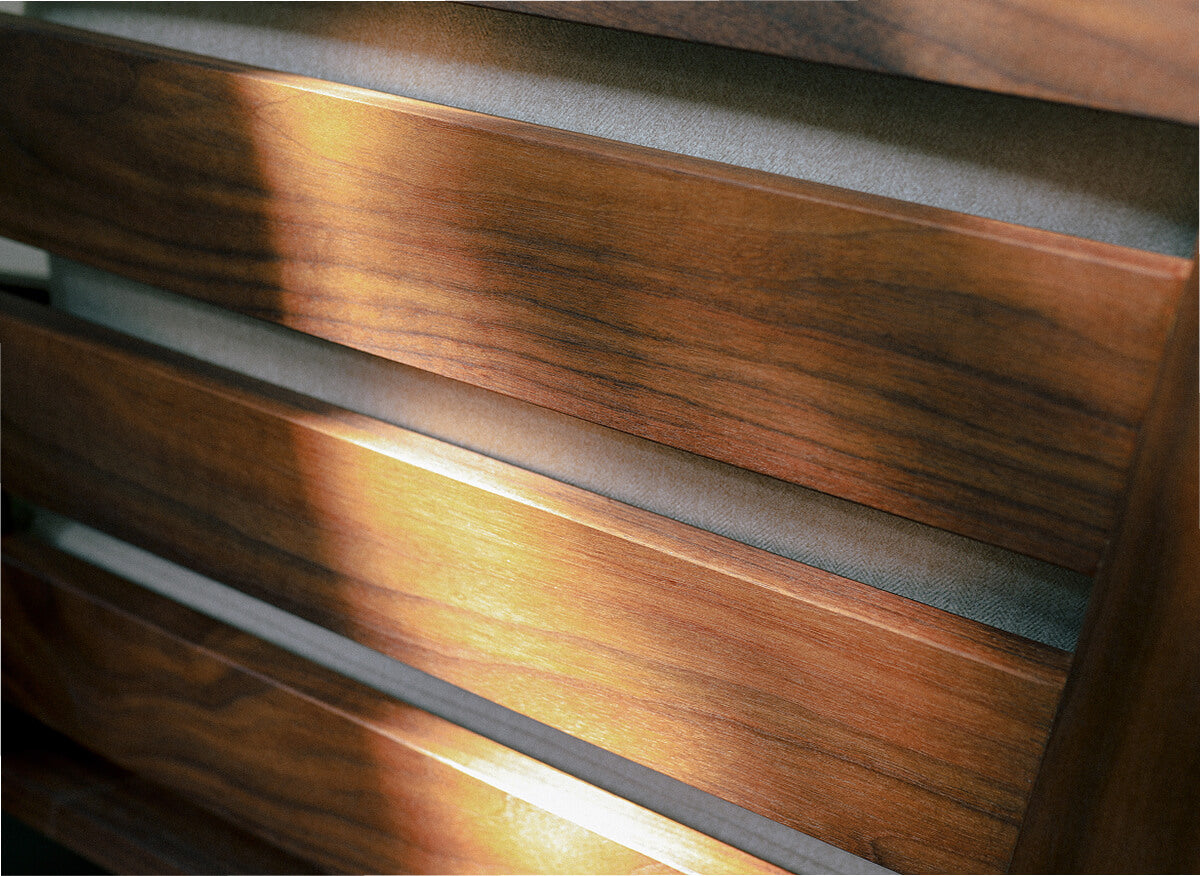
Don’t forget about the bones of your furniture: look for pieces made from sustainably sourced wood. Solid wood is traditionally a good sign that a furniture item is thoughtfully crafted. Plywood (in furniture jargon, this is generally called hardwood plywood or engineered hardwood) is a modern addition to furniture, and lightens pieces while keeping them resistant to warping and cracking.

When your furniture has plywood, it should either be formaldehyde-free, or disclosed to have extremely low levels of added phenol-formaldehyde in the resin for added strength: these two options are our preferred choice versus traditional plywood.
Compared to traditional urea-formaldehyde (UF), which can release formaldehyde into your home over time, phenol-formaldehyde (PF) is widely considered much safer. Plywood made using PF is low in formaldehyde and rapidly cures to non-detect levels by the time it is put to use. Plywood that is formaldehyde-free, like PureBond®, uses non-toxic, soy-based or MDI (methylene diphenyl diisocyanate) adhesives instead of traditional UF resins, which significantly improves indoor air quality.
Another good indicator to look for is CARB2 compliant plywood — which limits harmful formaldehyde emissions to protect indoor air quality and health. Keep a careful eye out for particle board or MDF, which are wood-based products often held together with formaldehyde-laden glues. Just say no.
Certifications to look for:
- FSC (Forest Stewardship Council) certified wood: Ensures wood comes from sustainable, responsibly-managed forests. These rigorous standards reverse deforestation, provide fair wages, safeguard plant and animal species, and respect legal and cultural rights to land and resources for future generations.
- PureBond®: While not a certification, seeking out furniture made with PureBond® ensures that this known source of formaldehyde exposure is eliminated.
- CARB2 Compliance: Guarantees that a composite wood product meets California Air Resources Board (CARB) standards, drastically limiting harmful formaldehyde emissions to protect indoor air quality and public health.

The Wood Glues and Finishes
The smallest details count! When it comes to glues and adhesives, you generally want to look for a shoutout that a manufacturer is using low- or no-VOC furniture glues. In terms of wood finishes, look for furniture that uses low- or no-VOC finishes instead of solvent-based lacquers that off-gas harmful chemicals. These less harmful finishes can be water-based, plant-based, or wax- and oil-based.

Certifications to look for:
- GREENGUARD Gold: This certification can also be applied to glues and finishes, and ensures the same low emission verification as stated above.
- SCS Indoor Advantage Gold: Certifies compliance with the most rigorous indoor air quality emissions standards in North America, measuring the product’s actual VOC emissions over fourteen days, and ensuring adherence to CA Special Environmental Section 01350.
- Intertek Clean Air: Verifies that products are low-emitting and contribute to healthier indoor environments., and can be certified under two different standards depending on their use: California Department of Public Health (CDPH) Standard Method v1.2 (CDPH 01350) and the ANSI/BIFMA e3 standard.
- Food Safe: Some products will be labeled “Food Safe”, denoting a list of ingredients that is food-contact-safe.
- Toy Safe: Some products will be labeled “Toy Safe”, ensuring their safety for use by babies, children, and those with allergies or asthma.
Making the most sustainable choice
After furniture that’s made to last, the most eco-friendly choice is furniture that already exists. Vintage furniture may not always offer the same benefits, but it is a sustainable option. Unlike the mass-market furniture of today, most vintage pieces were produced without modern manufacturing methods. Due to its age, most of the potentially harmful chemicals from vintage furniture will have dissipated, and you won’t have to worry about off-gassing. Locally purchased second-hand furniture also reduces the environmental impact of transporting or shipping a bulky item to your home.
But, if you aren’t totally digging that vintage yellow velvet sofa, and you’d prefer something a bit more modern to bring into your home, then quality pieces made with certified and durable materials are your best bet. These save resources and money over time, so when you can, invest in furniture that won't need to be replaced in a few years – pieces you can even pass down to those that come after you. The new vintage!
Quality materials aren’t just a financial investment, but also an investment into the health of our home (this beautiful planet). If you want to make sure your furniture stays out of landfills longer, prioritize materials like solid wood, natural latex, and natural fabrics for biodegradability, and high-density certified poly foam and durable synthetic fabrics for long-term durability (we’re talking decades!).
Lastly, consider shopping local when possible. Furniture and its components often travel between multiple locations before reaching a retail store or shipping warehouse, racking up greenhouse gas emissions along the way. Purchasing from companies that manufacture locally or in the U.S. reduces shipping emissions and keeps money in the local economy.
How to Spot Greenwashing
Unfortunately, it's easy for companies to claim their furniture is "green" or "eco-friendly" without much to back it up. Want to know how to spot the real deal? Just follow this checklist:
- Look for specific third-party certifications, not just vague marketing language.
-
Ask questions about materials, finishes, and manufacturing processes.
- What’s the material content of the upholstery fabrics? What kind of wood is being used, and can any certifications be provided? What is the cushion fill made of?
- Are any finishes used on fabrics or finished pieces?
- Where is furniture manufactured?
- Be wary of furniture that seems too cheap to be true! It’s unfortunate, but true, that sustainable materials and ethical manufacturing will cost more to produce.
- Research the company's overall commitment to sustainability, not just individual products.
The Bottom Line
Remember, we live in the real world: a 100% non-toxic piece of furniture might not always fit your budget or design vision. And that's okay! That fact that you are armed with the right information to make the best choice for you is a win. It helps to prioritize the largest components, like the frame and cushion fill, or, focus on what feels most important to you, like fabric certifications.
Shopping for non-toxic and eco-friendly furniture is about saying yes to better indoor air quality, longer-lasting comfort, and a smaller environmental footprint. Whether you prefer a traditional look or something more modern, there are options out there to make your vision a reality. One of our guiding values here at Medley is: we don’t believe you should have to compromise on aesthetics to make responsible choices!
Once you've experienced better-for-you, sustainable furniture, you'll wonder why you ever settled for anything else. (And in case you need somewhere to begin… you can start right here!)





Leave a comment
All comments are moderated before being published.
This site is protected by hCaptcha and the hCaptcha Privacy Policy and Terms of Service apply.