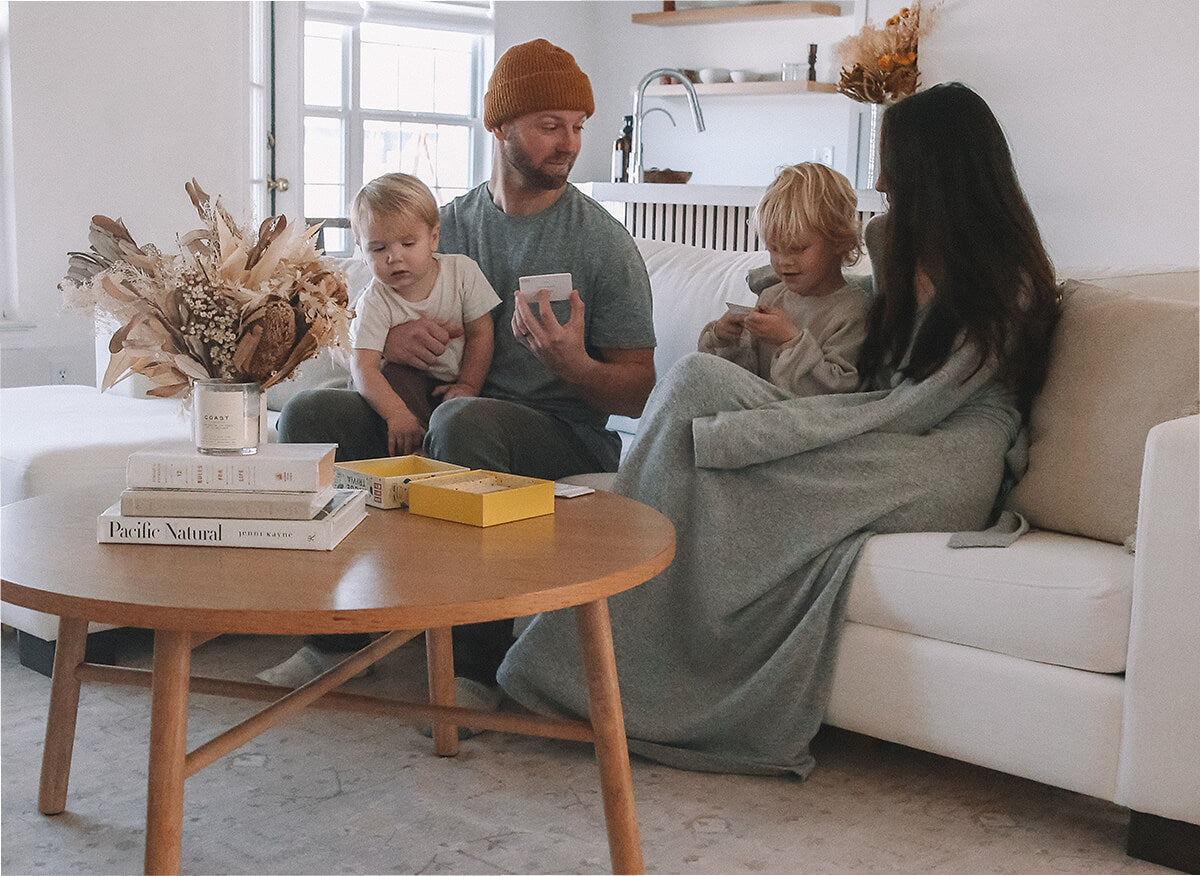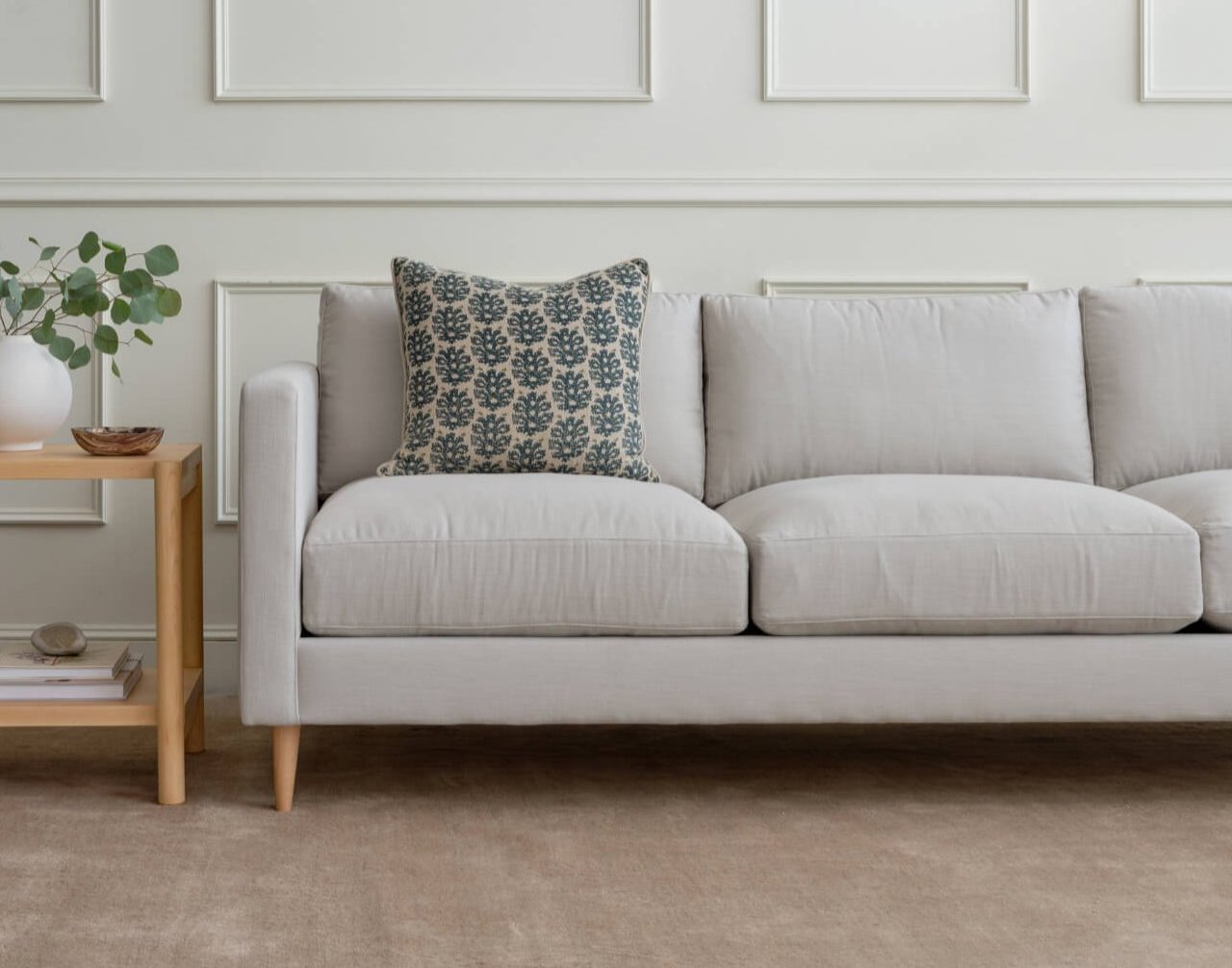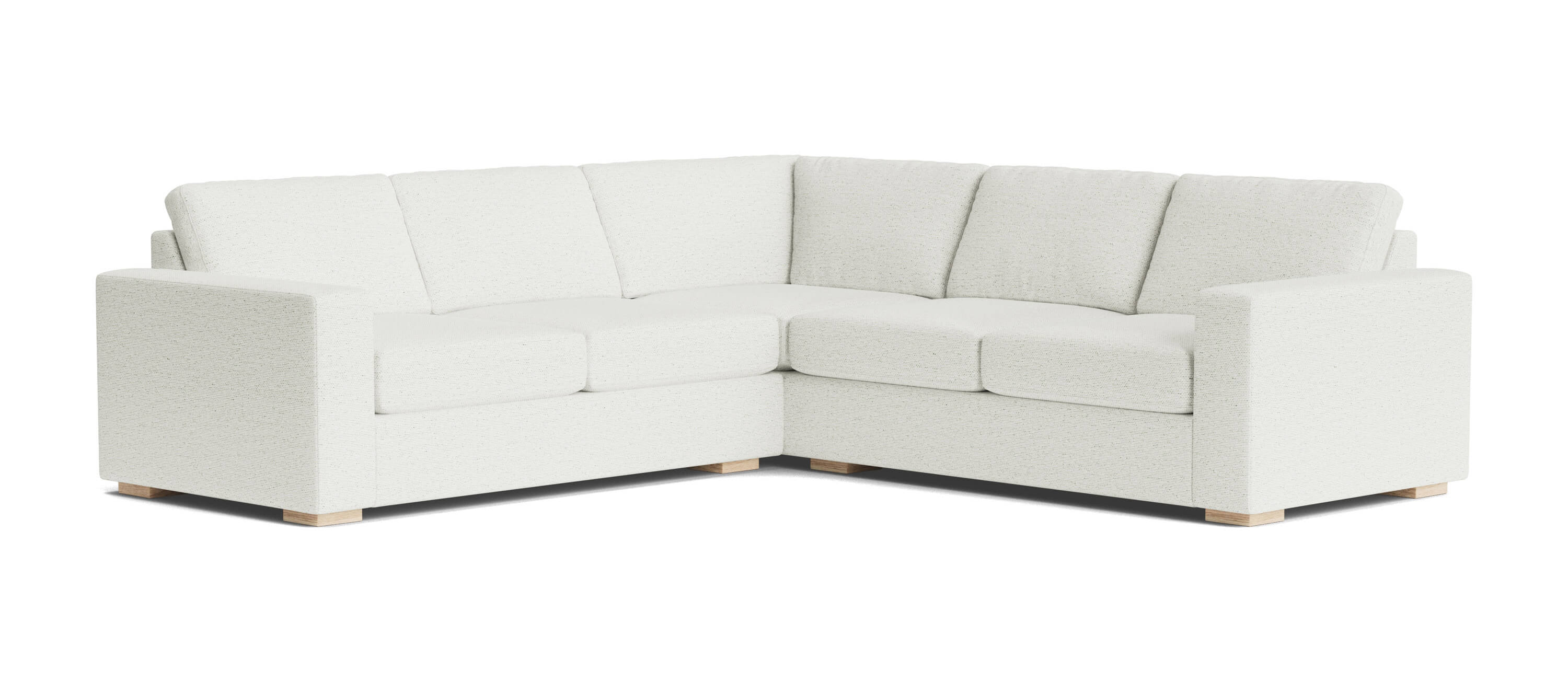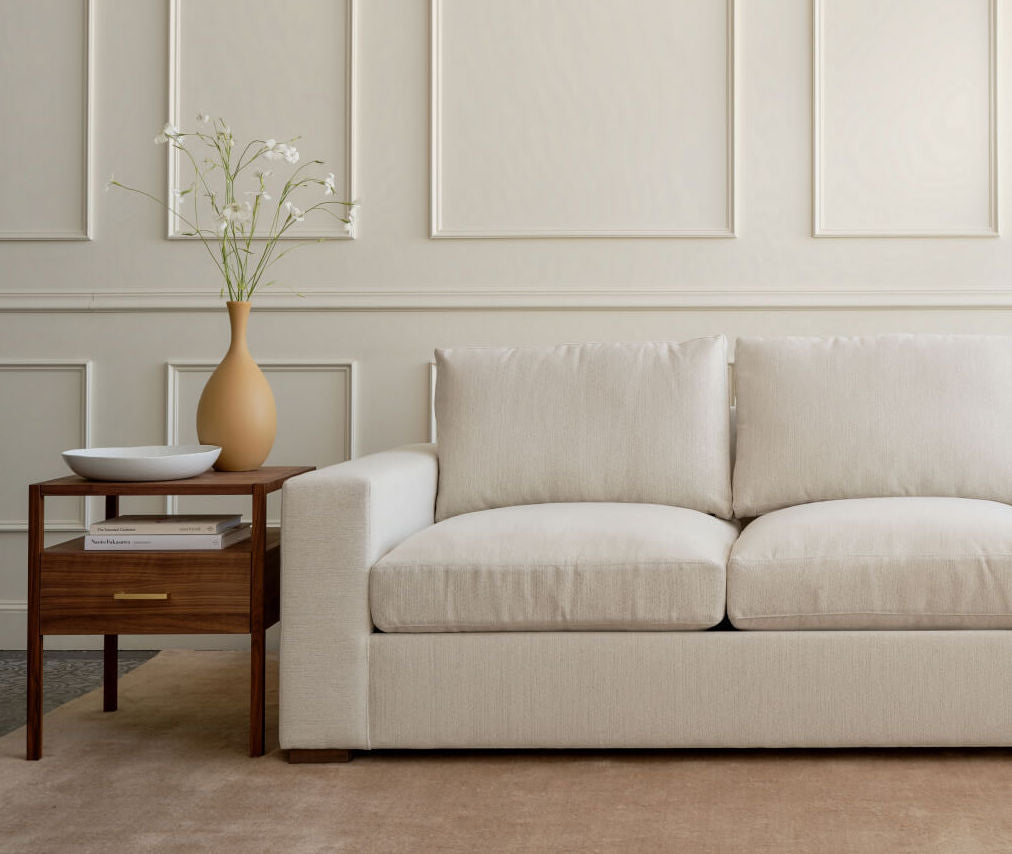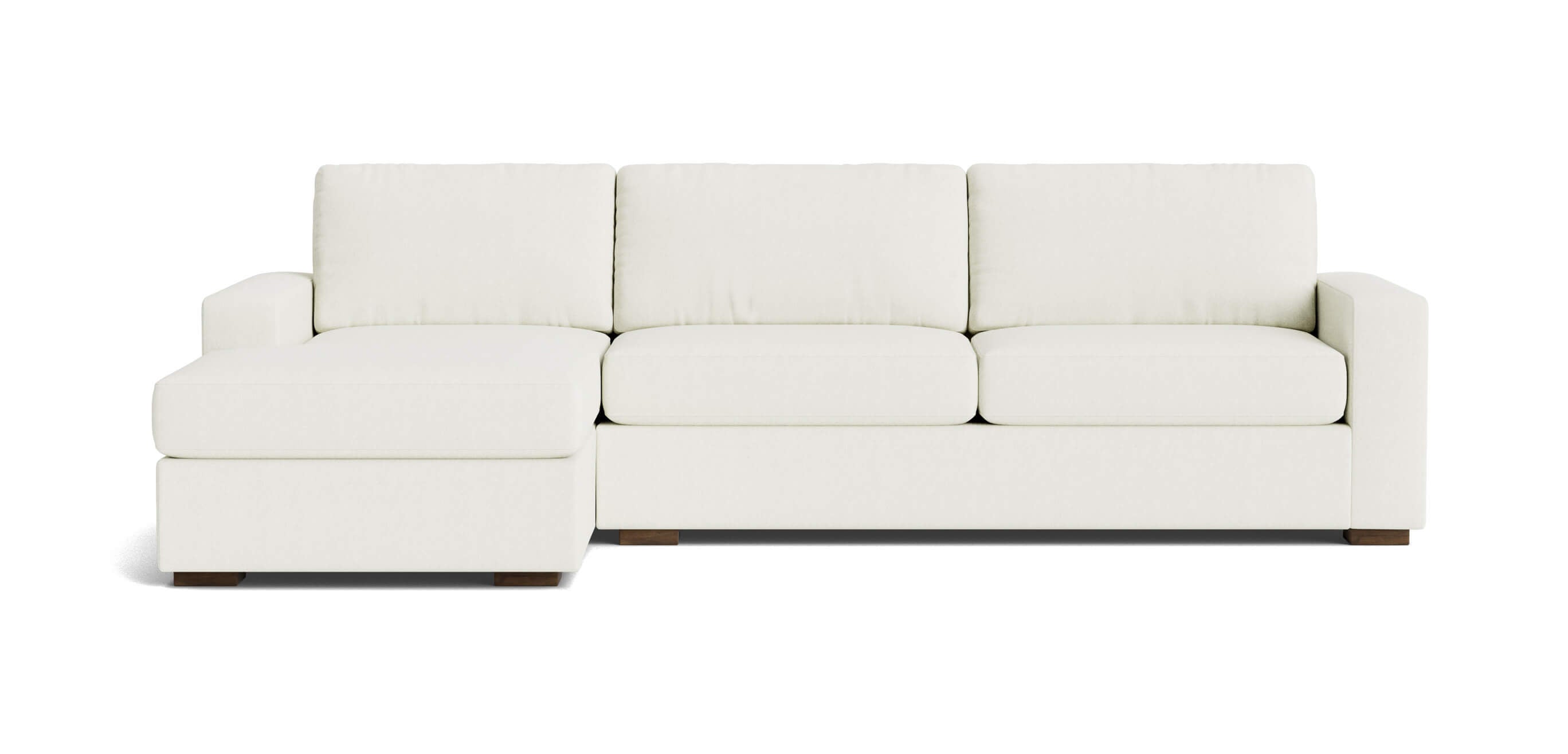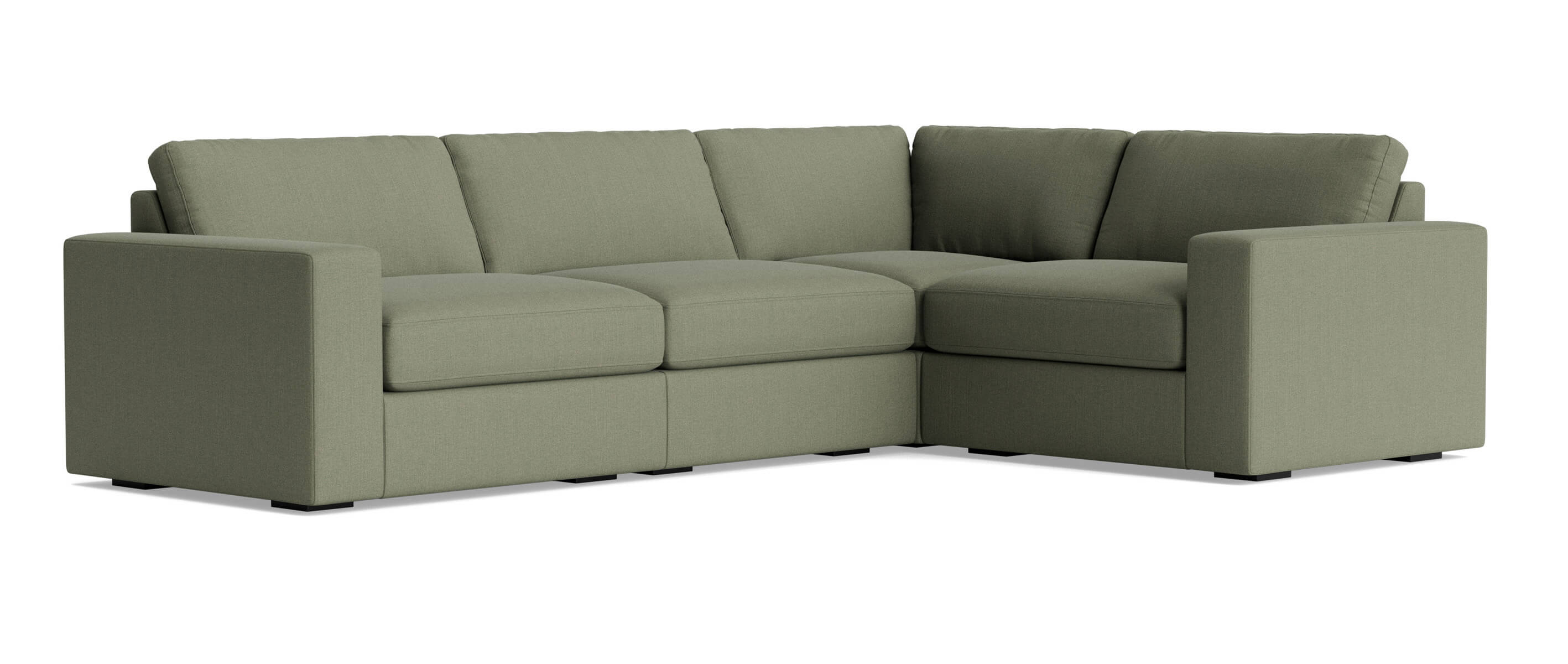


If you have children, you already know the living room is ground zero for everything: fort-building, snack time, homework sessions, TV-watching, and the inevitable stains (appearing with no witness and no explanation). Shopping for a new sofa when you have kids is about balancing your sense of style and comfort while finding a piece that can genuinely hold up to the beautiful chaos of family life. Waaay easier said than done!
The good news is: we’ve compiled this kid-proof guide to help you find a sofa that not only looks great, but will also survive childhood. With the right guidance on fabric, construction, sizing, and maintenance, you can find a durable, beautiful investment piece that works for your family, not against it. Here's everything you need to know: let’s dive in.
Start with Fabric: How to choose a fabric for a kid-friendly sofa
Fabric choice is arguably the most important decision you'll make when buying a sofa or sectional that can stand up to your family. The wrong upholstery can turn every minor accident into a *permanent* reminder, while the right one can practically shrug off the messiest of kids.

Color & Pattern: It’s a strategy
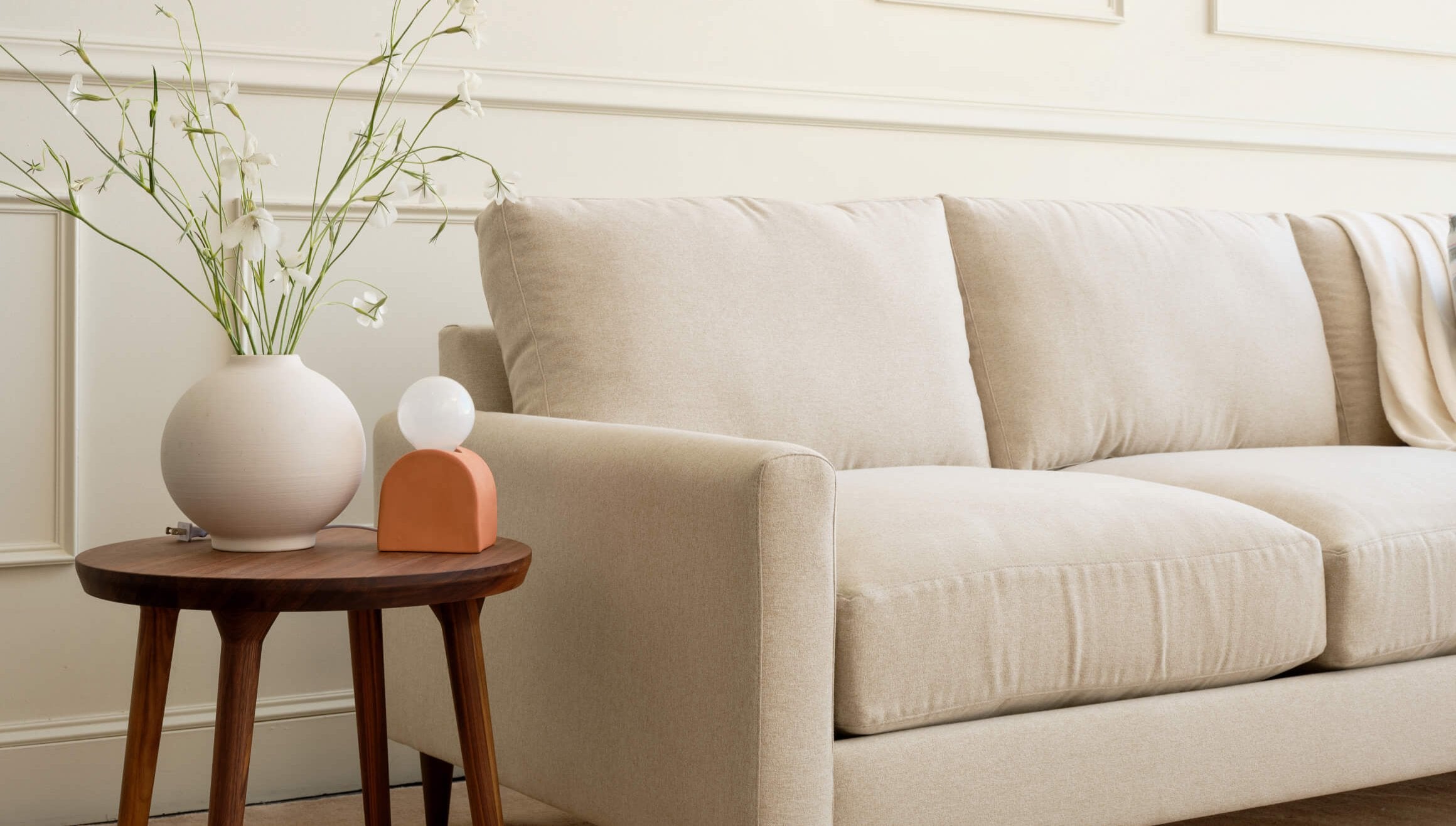
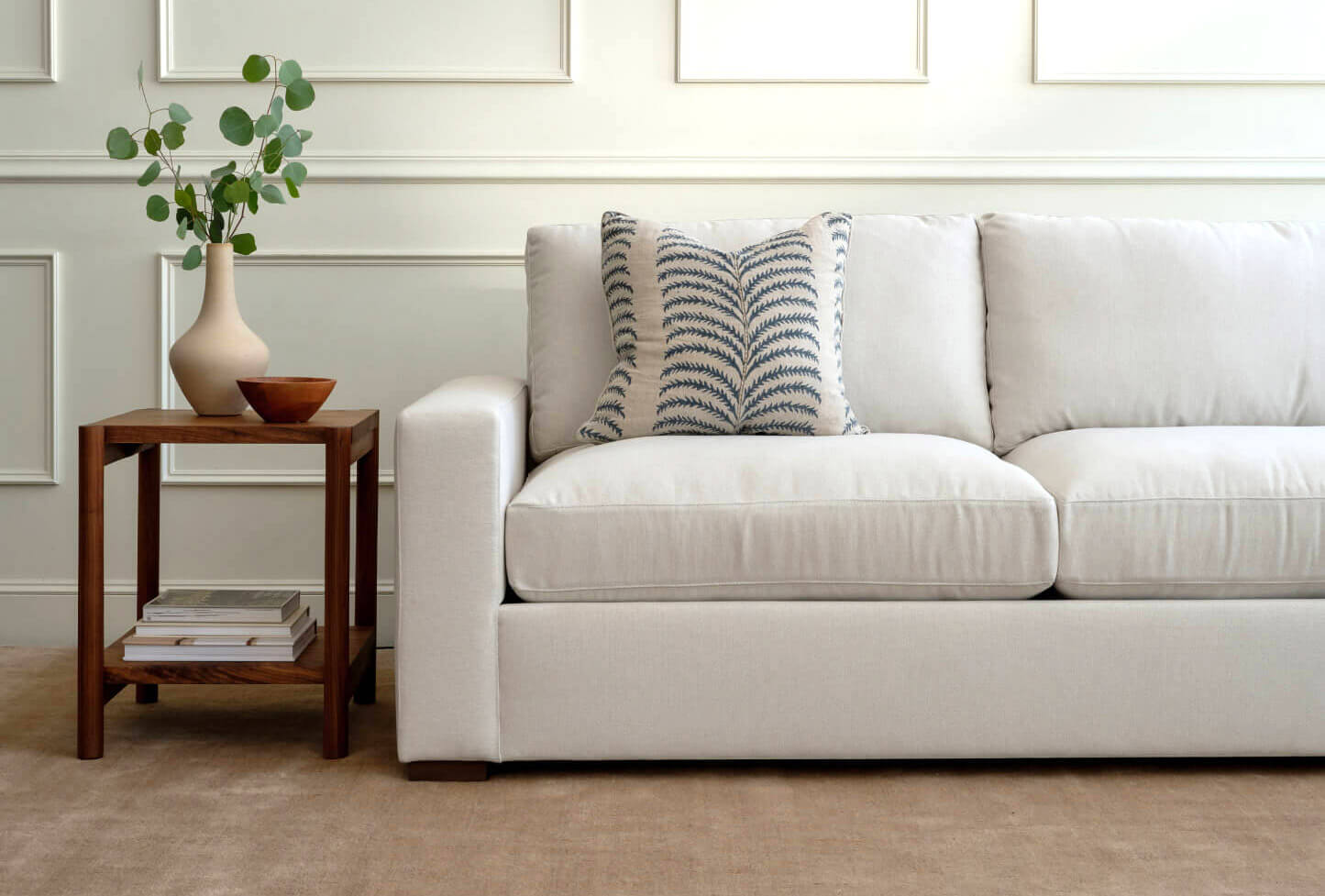
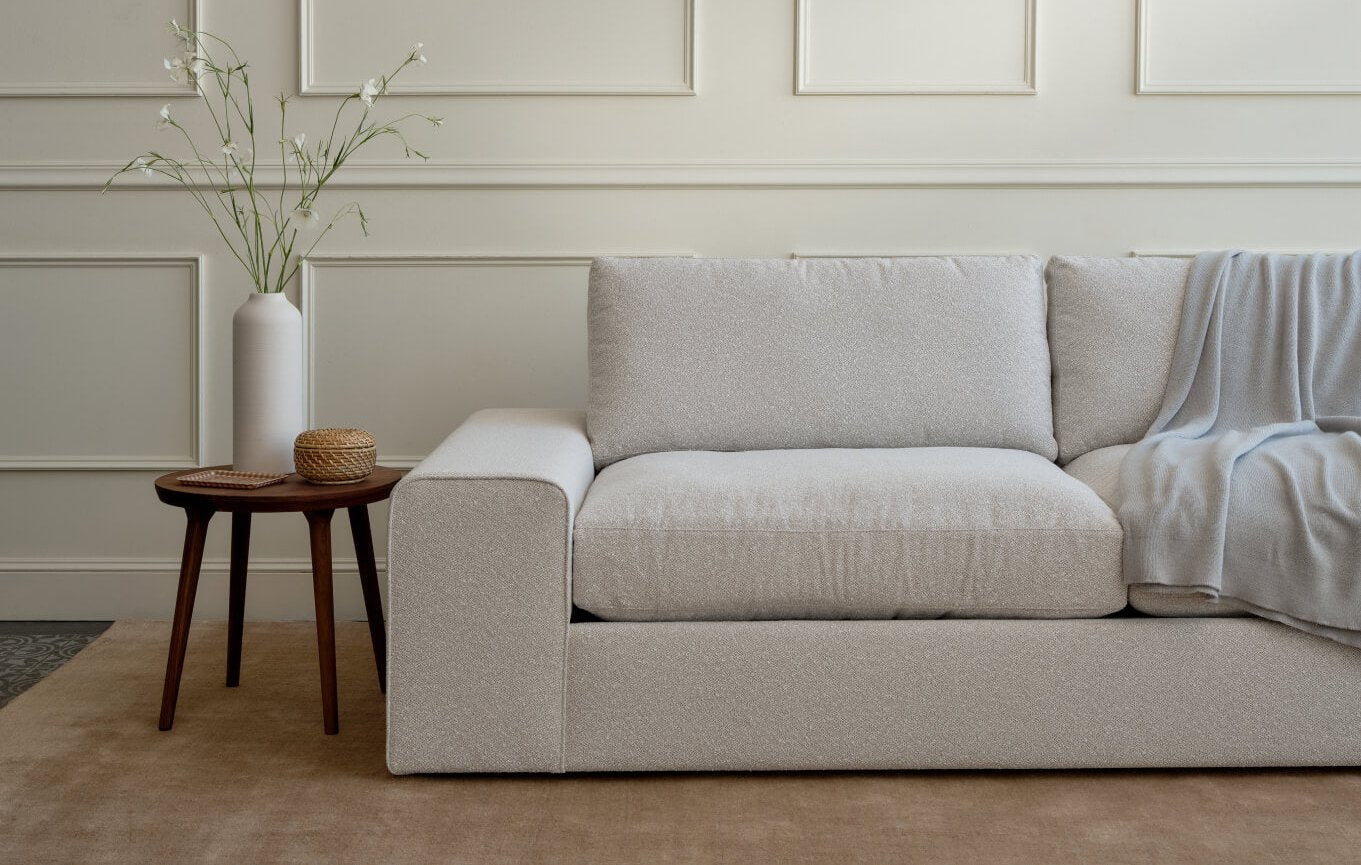
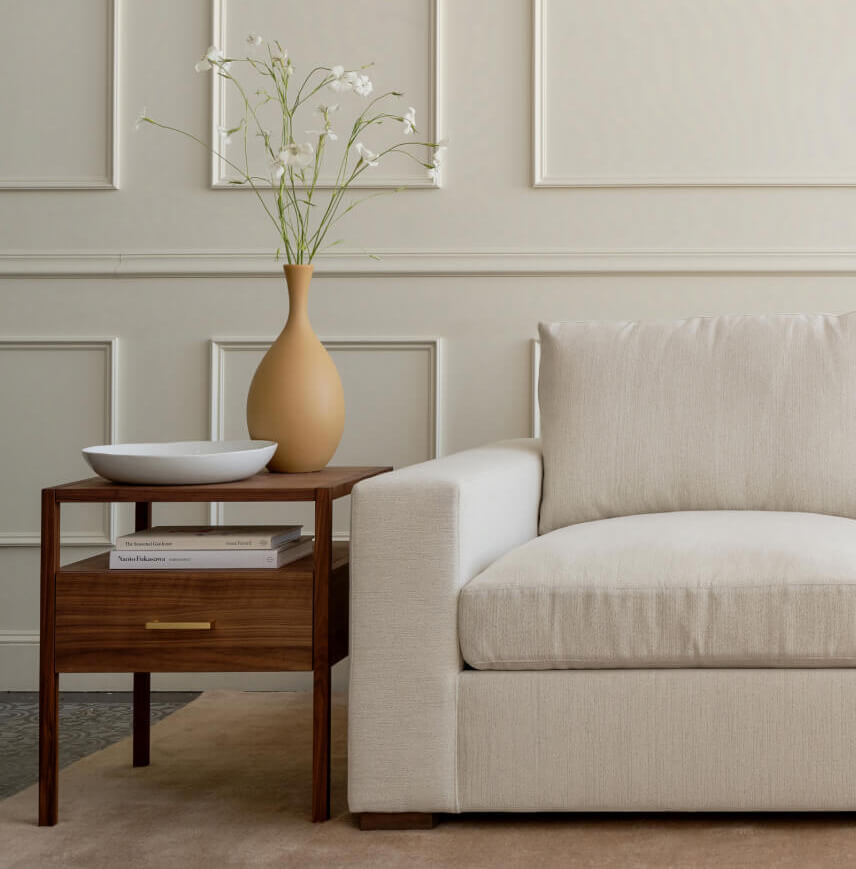
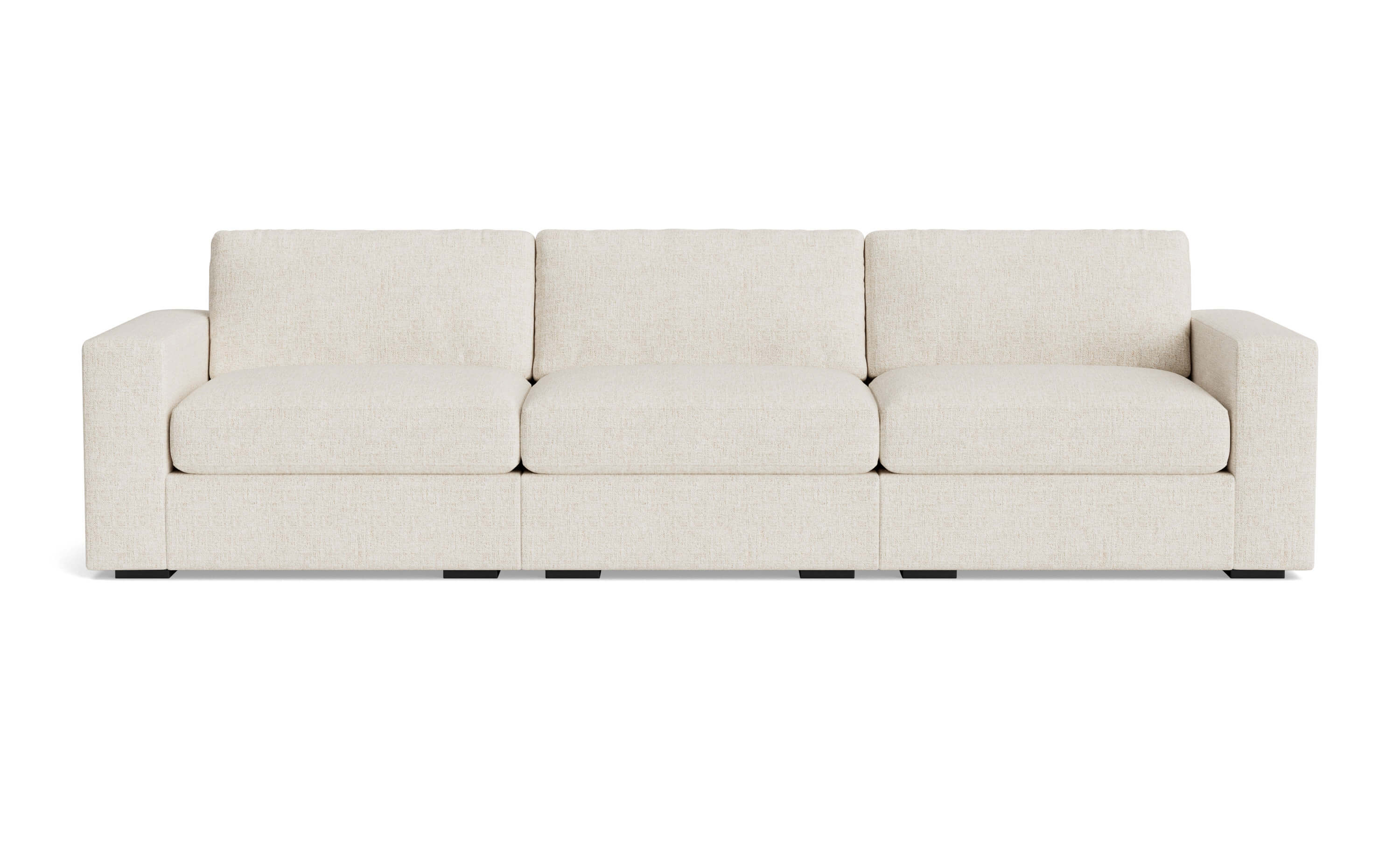
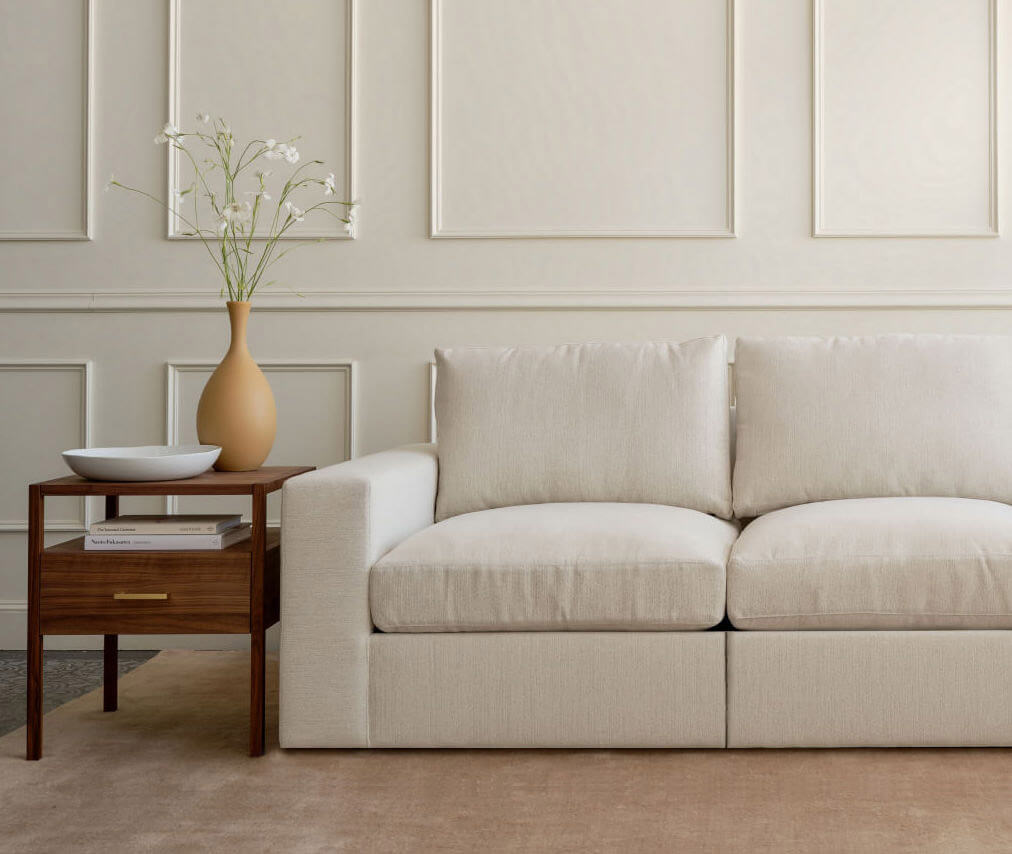
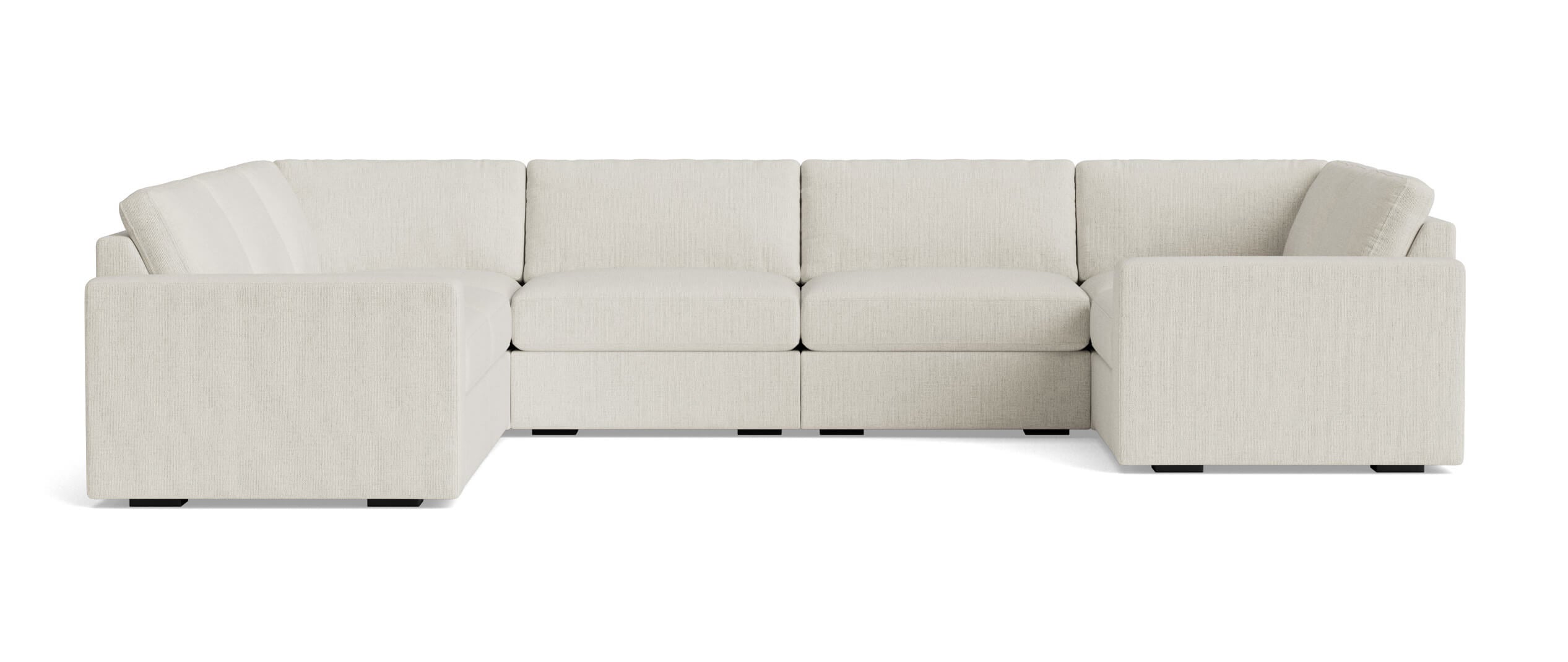
It’s likely that the first thing you’ll think of when choosing a fabric is the color your heart is set on. And, it’s a great first line of defense for general spills and wear: the right color choices will absolutely help make everyday life noticeably easier between deep cleanings. Now, we’re not here to break your heart, but we’ll present some considerations you should ponder (especially if that ivory sectional has been on your moodboard lately).
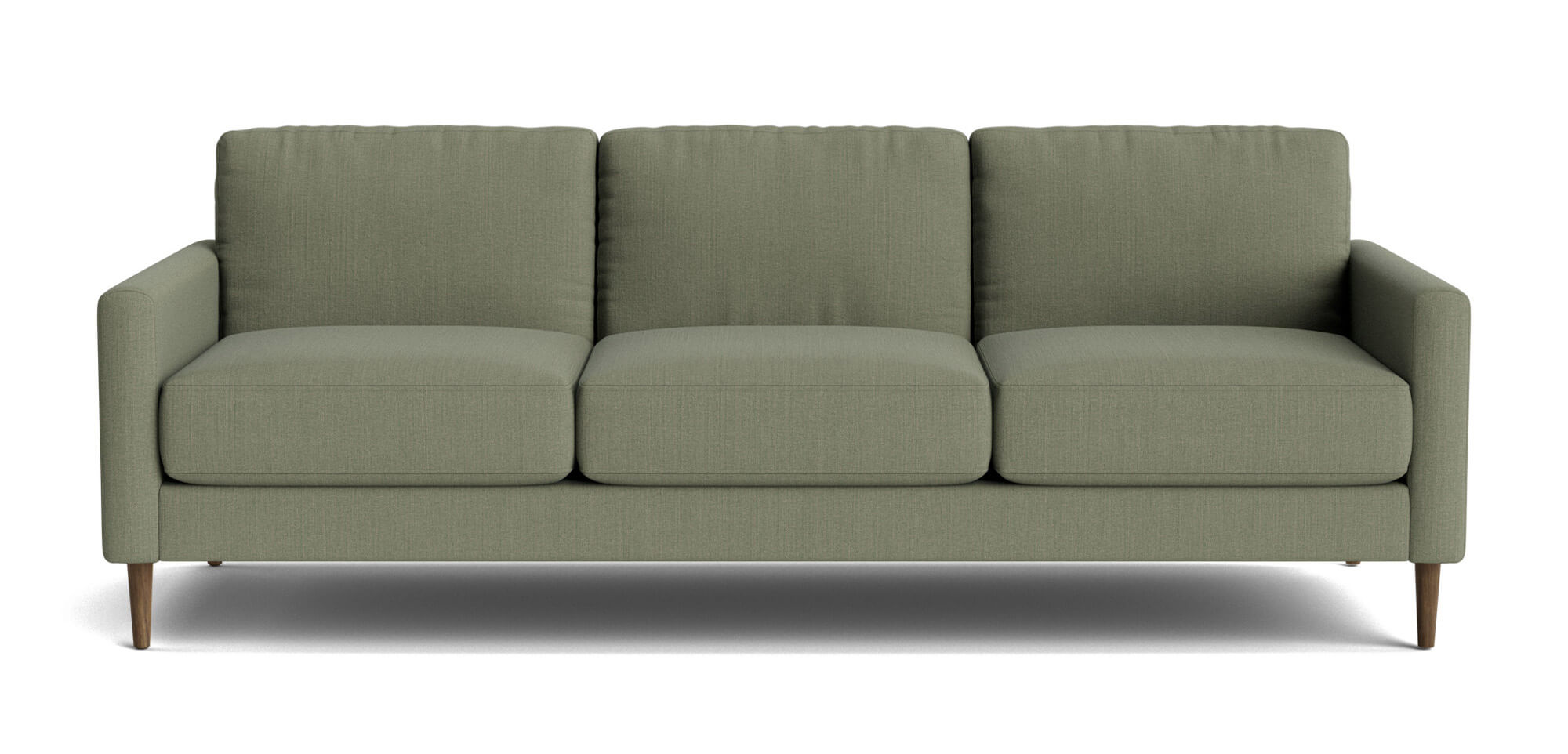
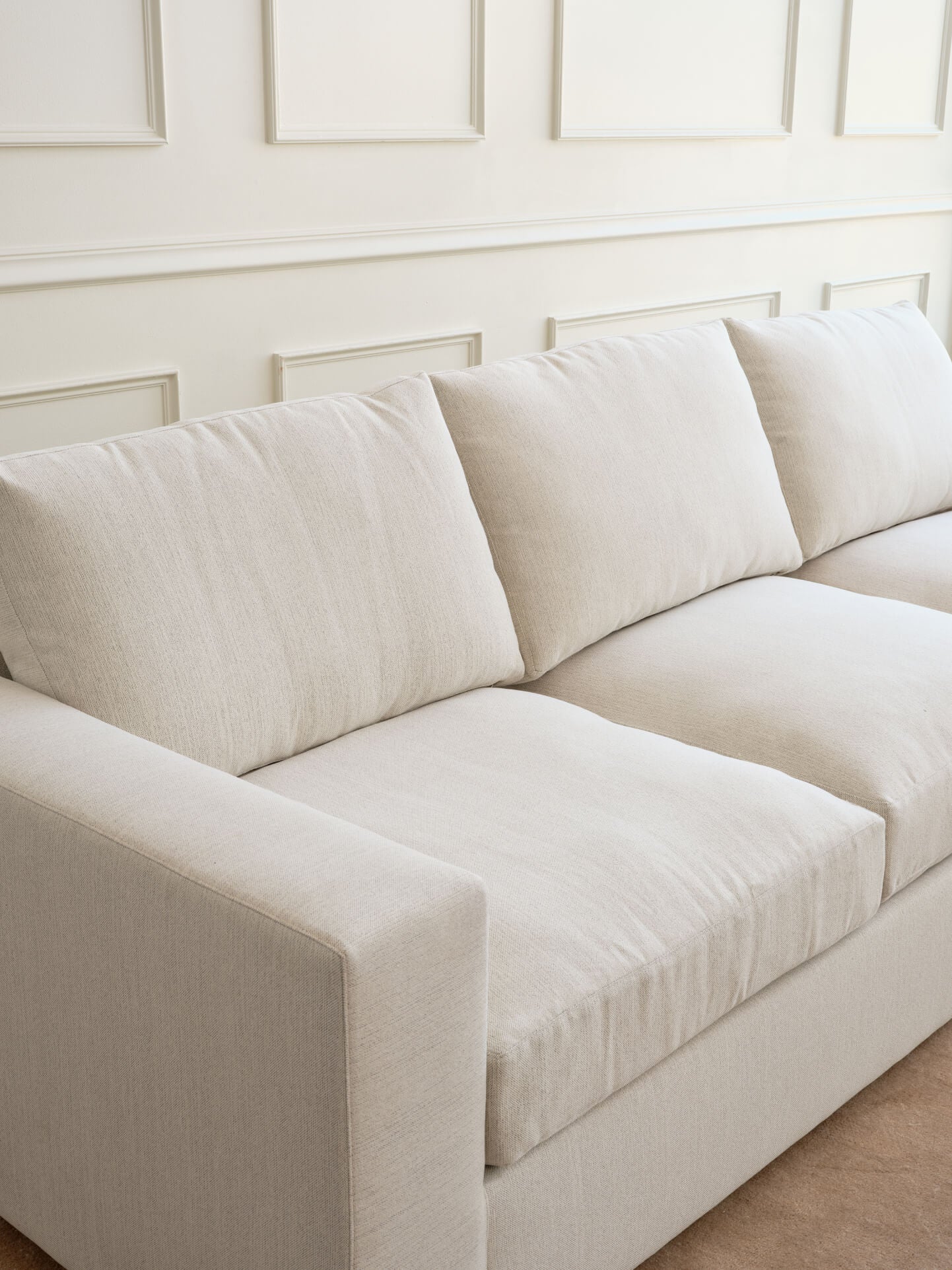
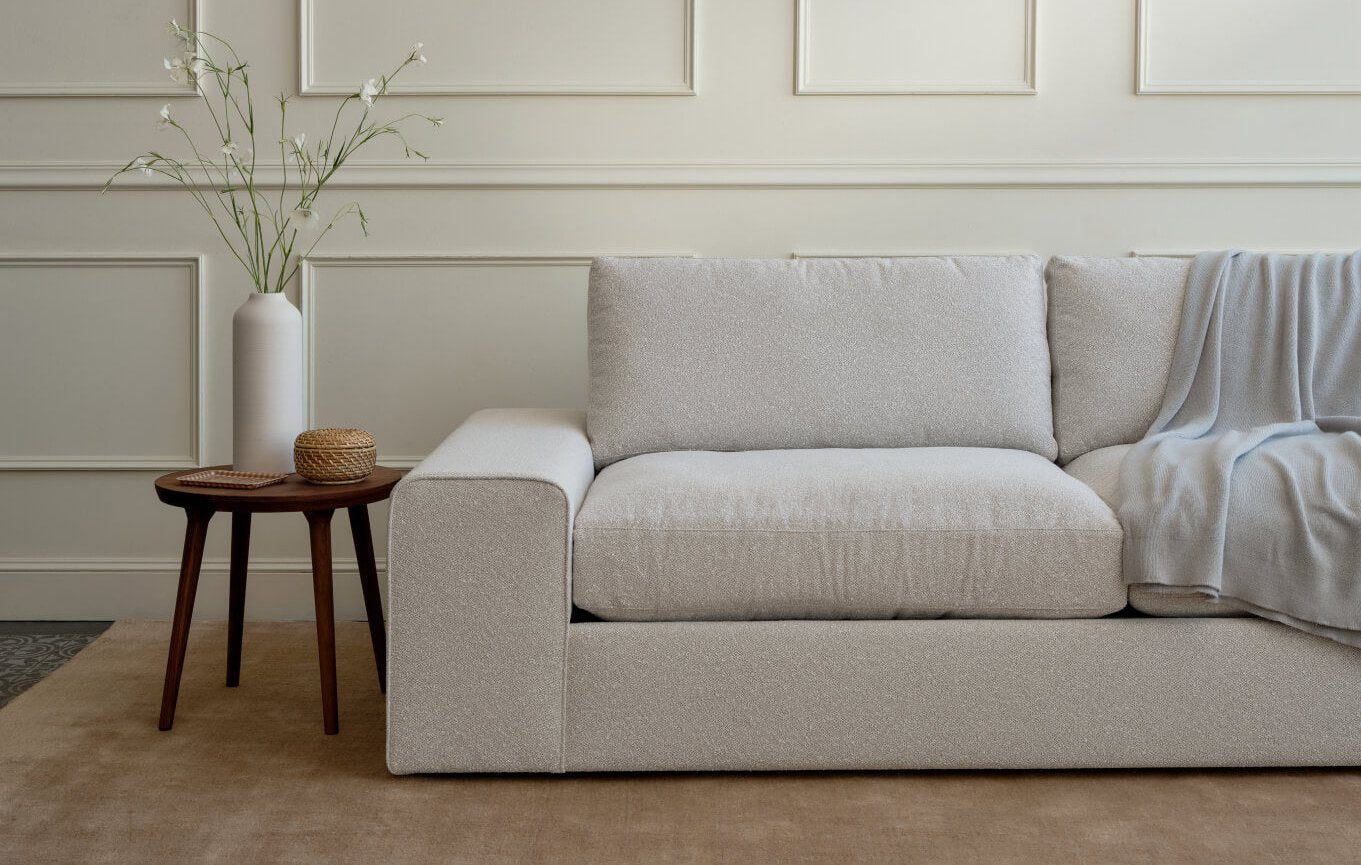
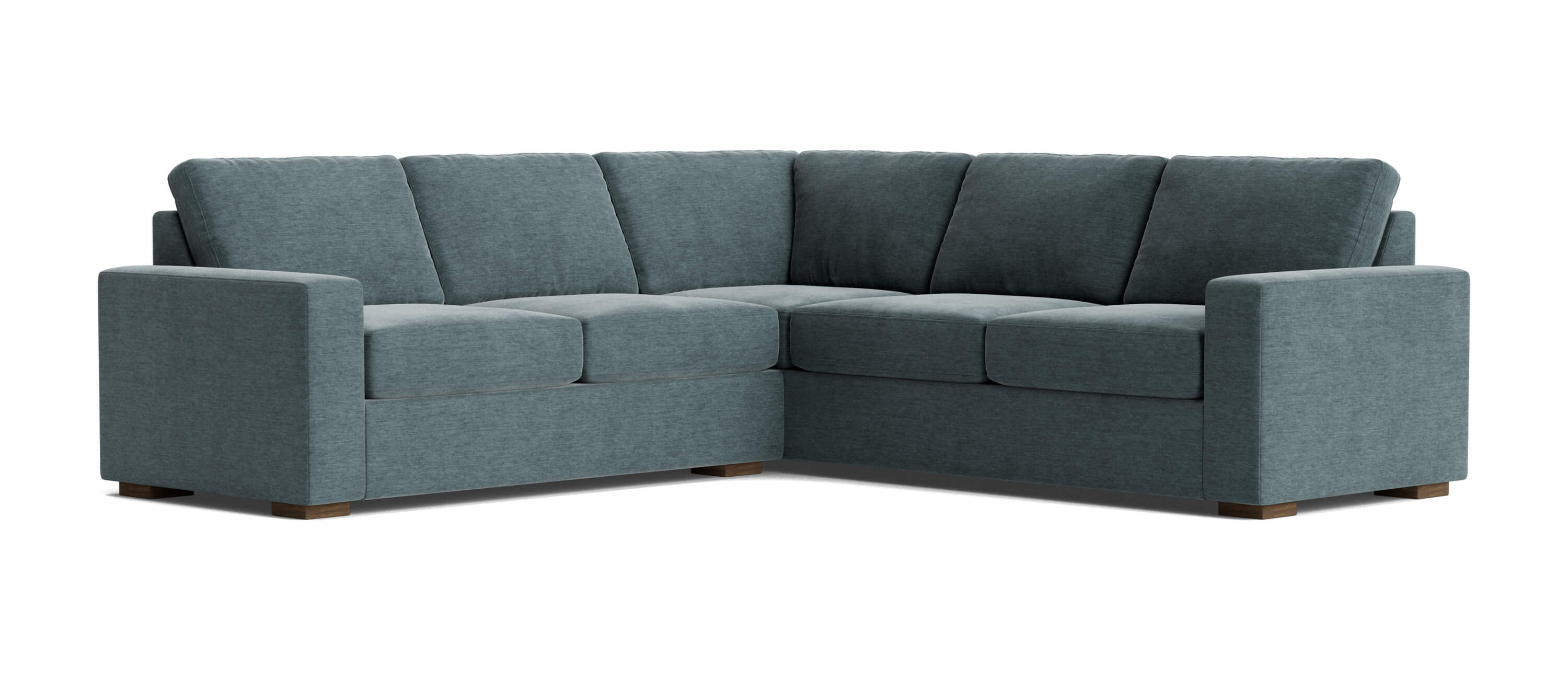
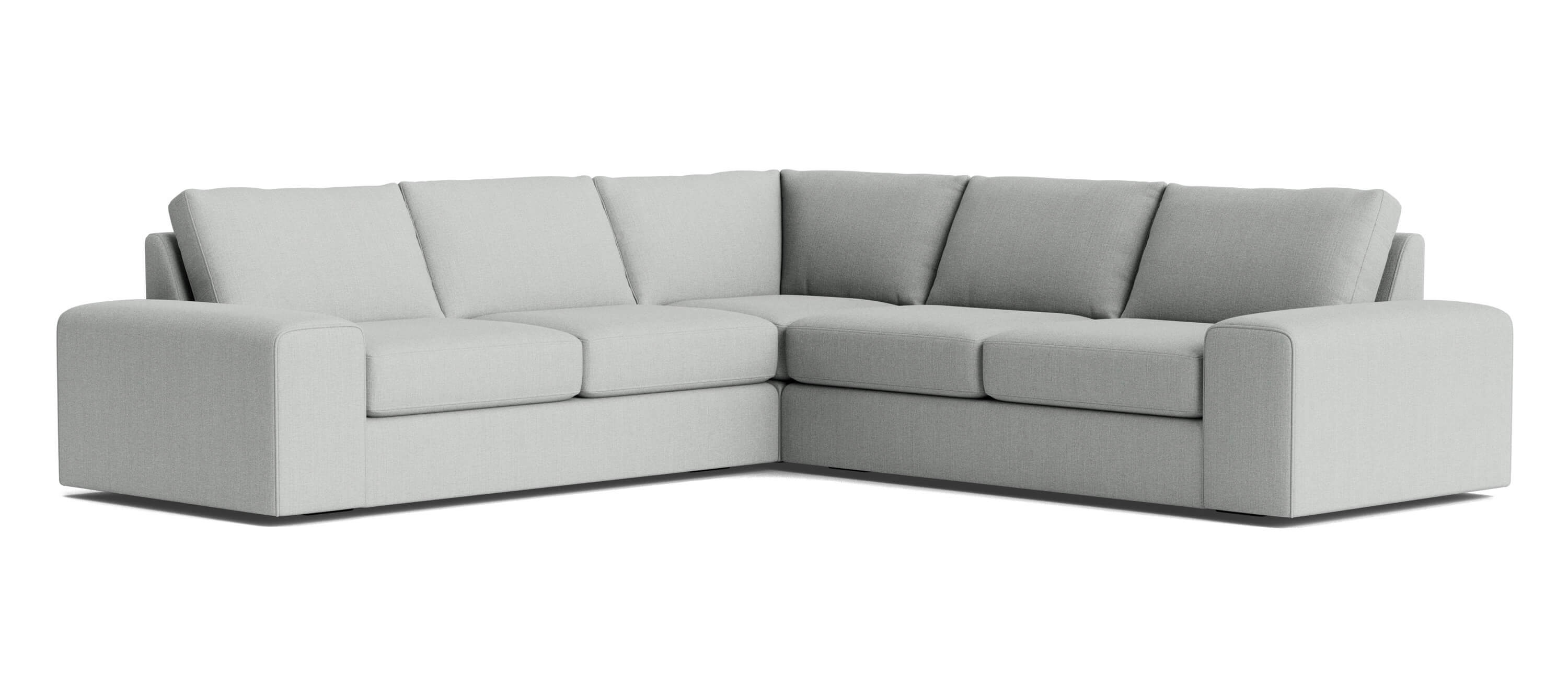
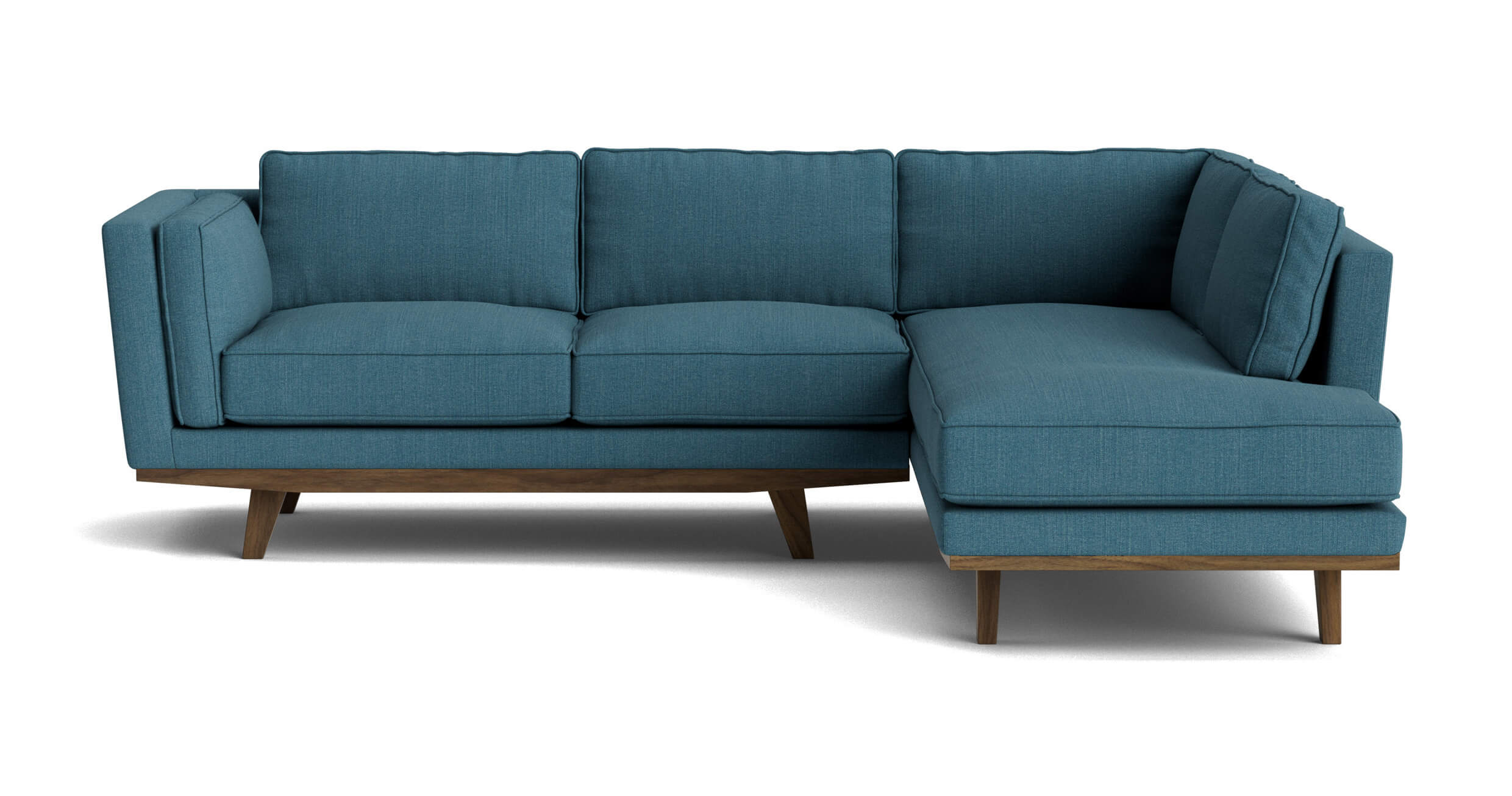
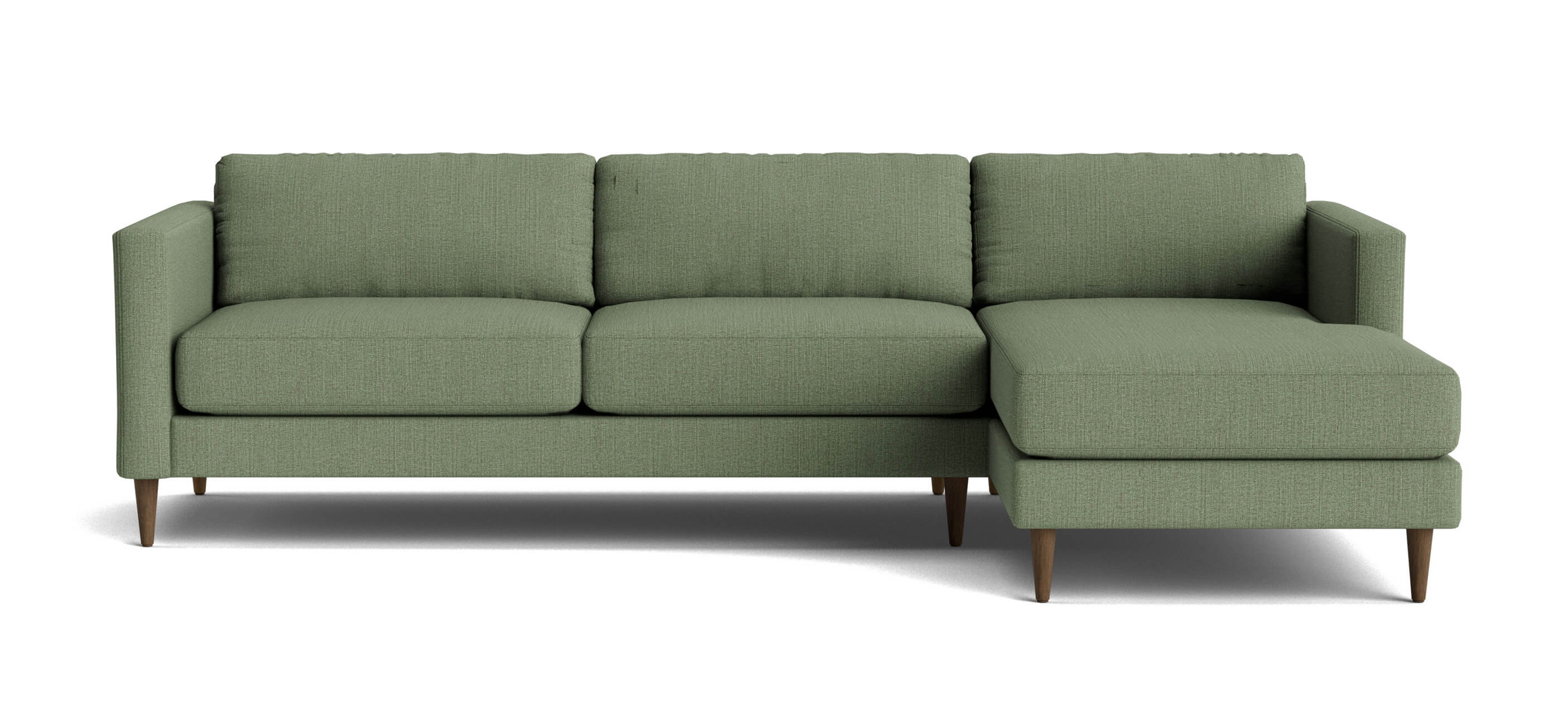
Light white and cream upholstery will show every mark immediately. Mid-tone neutrals – think warm taupes, soft mid-grays, earthy greens, muted browns – are also more forgiving in a way that light colors are not. Very dark colors are great for hiding dirt or light wear, but can sometimes highlight light-colored stains and food residue.
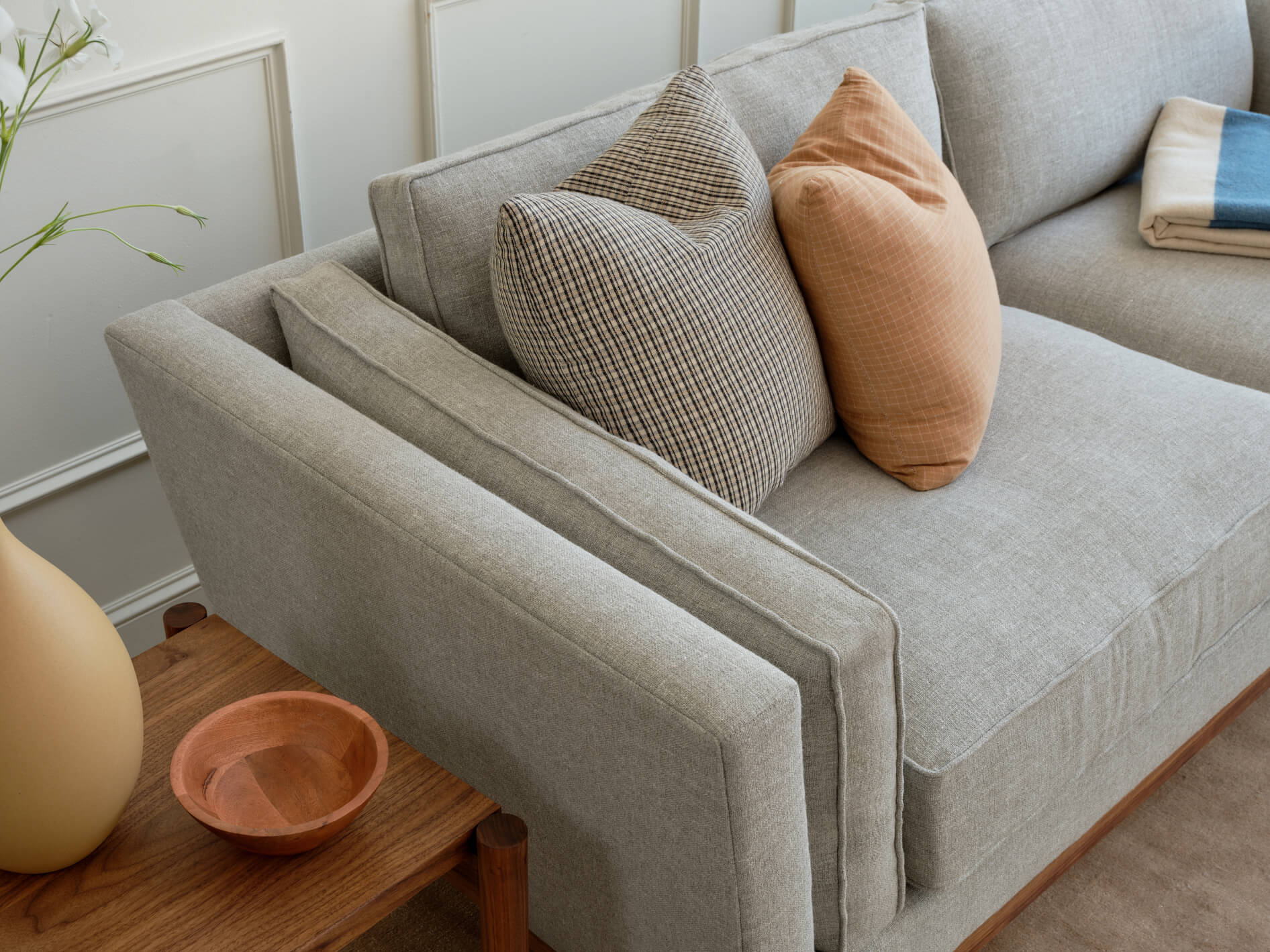
Also, consider that a variegated or multi-tonal fabric does a better job of disguising minor staining and everyday wear. Subtle patterns like those heathered textures and tweeds visually "break up" the surface so small marks don't stand out the way they would on a flat solid color.
Fabric Fiber Content + Stain Resistance
What might be an afterthought for some – deciding between a natural or synthetic fabric – is arguably an even more important consideration than color. Not all upholstery fabrics behave the same way when a glass of juice makes its way to your couch cushion, and understanding fiber types gives you a major advantage when making the right fabric choice.
When it comes to cleanability, synthetic options like polyester and olefin tend to be the most forgiving — most stains can be addressed quickly with minimal effort. Untreated natural fabrics, on the other hand, require more immediate attention and careful upkeep, though they reward that effort by developing a rich, lived-in character over time. Leather occupies its own category entirely: highly resilient in many respects, though it does evolve with use — we'll cover that in more detail below.
At Medley, we’ve split up our fabrics into four categories:
- Synthetic fabrics with stain resistance: these engineered fabrics are made from polyester or olefin, and come with our plant-based stain-resistant treatment to repel liquids and resist quick absorption. Spills bead on the surface instead of sinking in, and especially when you act quickly, they can easily be blotted or cleanly wiped away. These fabrics are our most durable option, and the one we’d recommend for families who really need that extra peace of mind.

- Synthetic fabrics without stain resistance: highly durable with good stain resistance, these synthetic fabrics are excellent for most active households, although they do benefit from prompt attention to accidents. They are still remarkably forgiving, and make a good choice for families with watchful adults!

- Natural fabrics with stain resistance: these warm natural fibers offer a balance of organic texture and practical protection. The added stain resistance offers solid everyday protection against most accidents. It’s good to note, some stains will be harder to remove, so act quickly when spills do happen.

- Natural fabrics without stain resistance: beautiful and breathable, these natural fabrics demand the most care. It’s important to note, natural fabrics can experience color-lifting when spot cleaning — think of it like a 100% cotton dark denim. A good upholstery cleaner can assist in pulling stains out, but make sure not to rub the fabric, as it can lift color from the weave and leave a mark! We’d say this category is best reserved for households with older children who have outgrown the everything is my artistic canvas or spill-everywhere phrase.

A note on fabric safety: PFAS, flame retardants, phthalates, and more
Since upholstery is the part of your sofa that’ll require the most skin contact (and in some young children’s cases, mouth contact), it’s important to be aware of all of the potential harmful chemicals that you could be exposed to.
PFAS: These are per- and polyfluoroalkyl substances, sometimes called "forever chemicals," and have historically been used in manufacturing fabrics and stain-resistant fabric treatments. Not only do PFAS raise environmental concerns, but these chemicals can also have a negative impact on human health, particularly for young children who spend a lot of time in direct contact with upholstered surfaces. PFAS exposure has been linked to countless health risks, ranging from endocrine and hormone disruption, developmental delays, and an increased risk of cancer. When shopping for a kid-friendly sofa or sectional, look for fabrics that specifically call out that they are PFAS-free. Ideally, it’s best to request independent lab verification from the company as well. Stain resistance and chemical safety are not mutually exclusive.
Flame retardants: These treatments have been used in many consumer and industrial products like furniture since the 1970s, to decrease the ability of materials to ignite. Similar to PFAS, flame retardants have also been linked to significant health issues, like endocrine and immune system disruption, neurological and developmental damage, and certain types of cancer.
Phthalates: Phthalates are a group of chemicals that are commonly found in low-quality synthetic upholstery, fabric treatments, and some cushion foams. They are semi-volatile organic compounds (SVOCs) that off-gas from furniture, and are known endocrine disruptors linked to reproductive system dysfunction, children's asthma, neurodevelopmental issues, and cancer.
At Medley, testing for PFAS, flame retardants, and phthalates is part of our mission-driven approach to source safer, more environmentally-friendly materials that are better for you and your families. We do our homework before any fabric makes it into our collection: that means verifying certifications and if needed, working with a third-party testing lab to confirm materials are safe.
Every fabric and leather we offer is certified by OEKO-TEX® Standard 100, GREENGUARD Gold, or Declare Red List Free. We keep flame retardants out of our furniture entirely: no treated fabrics, fillings, or components of any kind. We believe these chemicals pose real risks to your health, so we take care to verify they're not present at any stage of our manufacturing process.
Fabric Weave + Rub Count, Explained
We’re going a step beyond color and fiber type: pay close attention to how your chosen fabric is woven! Tight weaves are your best bet for a family home – the densely packed fibers create a smooth, flat surface that resists moisture better than looser fabrics, providing stronger protection against spills and accidents that come with sharing your home with little family members.
Rub count is a standard industry measure that indicates how strong a fabric is against fiber breakage. This is determined by having a machine rub the fabric back and forth (like sitting down and standing up) to calculate when an upholstery fabric will show wear. For family use, it’s a safe bet to consider fabrics rated 50,000 double rubs and higher. Anything below 15,000 is considered light-duty fabric that will show signs of wear more quickly.
Fabric Care: Wiping, Spot Cleaning, and Machine Washability
Wiping: This is where synthetic fabrics — especially those with stain-resistant finishes — truly prove their worth. Thanks to their resilient, easy-care nature, many spills can be effortlessly whisked away before they ever set. Simply reach for a clean, lightly dampened cloth and gently blot the affected area. Keep in mind for every fabric, best results use a soft touch rather than vigorous scrubbing, particularly on deeper, richer-colored upholstery.
Spot Cleaning: On many fabrics, even if your sofa’s upholstery is machine washable, it’s best to spot-clean first for isolated stains. To spot clean, use a mild soap or detergent, and remove the soap and liquid using an upholstery cleaning tool. This can be a longer process, depending on the stain, so head to our Product Care page for the details. Special note: many natural fabrics do not hold up to spot cleaning, so if you need to use this method, be sure not to rub the fabric when treating.
Machine Washing: With children in the house, the ability to truly wash your sofa cushions can be a non-negotiable for some. Rather than those one-off marker or red sauce stains, some messes just need the whole nine yards. When someone is accidentally sick on the couch, being able to pull off the cover and toss it in the wash (always on cold!) is an enormous relief and a game-changer for families. Reserve full machine washing for when spot treatment isn't enough, and always follow the fabric’s specific care instructions to maintain the fabric's integrity over time.
What about leather?
Leather upholstery can be surprisingly practical for families with kids. Liquids wipe off the surface without absorbing too quickly, crumbs don't embed, and there's no fabric texture to trap yuckies. You can choose between a natural or corrected leather: here at Medley, we offer both! All of the leather upholstery we offer is “natural” in that they are real hides, however, there’s an additional distinction to be aware of in how each leather is treated.
Natural, full-grain leather retains the hide's original surface, offering exceptional durability and a rich character that deepens beautifully over time. It will develop a patina and show light markings with everyday use, so it's worth considering whether you'd embrace that natural aging as part of its charm.
Corrected top-grain leather, on the other hand, is gently sanded to remove imperfections and embossed for a clean, uniform appearance that resists the patina of full-grain. The trade-off is that deep scratches — the kind that come from, say, a curious child and a pair of scissors — can be harder to repair once they've broken through the surface finish.
In summary: our preferred fabric choice
Of course, nobody knows your kids and your family like you do, but if it’s anything like ours, you’ll want the safest bet for the long run. For all of the peace of mind, we’d recommend opting for a certified synthetic fabric with our plant-based stain resistant treatment for busy, active families. This is always going to be the most durable option, and ensures you won’t have to struggle with stains that just can’t come out or worry about replacing your sofa in just a few years.
Ultimately, when choosing upholstery for your new sofa or sectional, you’ll have to decide what works best for your family – after all, each one is unique! For easy reference, you can find our most durable, easy-to-clean fabrics and leathers by spotting our “kid-friendly” icon on our fabric samples page.

What’s Inside Matters: Safer materials & durable construction
When you have children who sit, lay, and occasionally apply their entire mouth directly on your sofa cushions, the materials inside your furniture feel important. We’ve already covered fabric safety above. Moving on: to know if that new sofa is a good choice for your family, start from the inside out!
The Frame: All upholstered furniture frames in Medley’s sofas and sectionals are made with domestic, kiln-dried, FSC certified wood, corner blocked for strength and stability. Plus, each piece comes with a lifetime warranty against cracking, breaking, or warping. That’s a win for even the busiest of households and rowdiest of kids.
There’s another key component in safe furniture frame construction, which is ensuring the wood used is formaldehyde-free. Formaldehyde is primarily present in furniture resins, which are commonly used to bind particleboard, medium-density fiberboard (MDF), and plywood together. It can also be present in paints, varnishes, and other finishes applied to furniture surfaces. This chemical is released over time as a gas, a process known as off-gassing. Formaldehyde is a known human carcinogen, also causing respiratory issues, eye and throat irritation, and asthma.
At Medley, we’ve spent over 20 years creating sturdy, durable furniture pieces that don’t rely on low-quality wood materials containing formaldehyde. We use a combination of solid wood, PureBond® hardwood plywood, and CARB2-compliant engineered hardwood to create our furniture and frames, providing you with safer furniture for your family.
The Cushions: Next, consider what’s actually inside your sofa: the cushions. Our cushion foams and fillings are known for their comfort, responsiveness, and ability to retain shape over time – and also for their having a significant impact on your health.
At Medley, you can choose from Global Organic Latex Standard certified natural latex or CertiPUR-US® certified poly foam sofa cushions. Both options are wonderfully supportive and sumptuously soft, and are much better options for your health and the planet than traditionally produced low-quality poly cushions.
Our GOLS certified natural latex cushions provide a plant-based, more biodegradable alternative to poly foam, with exceptional comfort and durability, and no synthetic chemical inputs or VOCs to worry about. Our CertiPUR-US® certified poly foam sofa cushions are certified free from thousands of harmful chemicals, reducing off-gassing of chemicals that children are more sensitive to than adults. Want to learn more about the difference? Head to our handy blog post, right here.

Long Live Your Sofa: Maintenance and Care Tips
Even the most kid-proof sofa on the market requires a consistent care routine to keep it looking its best. Fortunately, maintaining a family sofa doesn't need to be complicated — a few habits make a large difference over time.
A weekly once-over with the brush attachment on your vacuum removes crumbs, dust, and the accumulating debris of family life before it works its way deeper into the fabric. Once a month, do a more thorough vacuum of the entire sofa including underneath cushions and spot check for any developing stains that need treatment.
Sometimes, you need a little something more proactive, especially for special occasions when more children than usual will be in the living room. An easy DIY solution can be a designated blanket over the most-used seat, or a full slipcover at times when you need it most.
Lastly, for general longevity, it helps to rotate cushions and covers regularly to ensure even wear and maintain the appearance of your sofa over time.
Long-Term Cleaning Tip: Even the best sofa benefits from an occasional all-over upholstery cleaning every 12–18 months in a high-use family home. You can find our recommended upholstery cleaner right here. We use this mighty machine in our own homes, which reaches deep into the fabric fibers and removes accumulated allergens, bacteria, and embedded dirt that surface cleaning can't address.
The Bottom Line
Buying a sofa for a household with children is genuinely one of the more complex furniture purchases you'll make — because you're not just buying for today's nap-time and snack-time, you're investing in something that needs to outlast toddlerhood through high school and probably a few art projects that get more ambitious than intended.
The key is to approach it with intention: choose fabrics based on your actual lifestyle, prioritize construction quality over surface aesthetics, verify that the materials inside are safe for your kids, and build in a maintenance routine that protects your investment. Do all of that, and you can absolutely have a living room that looks beautiful, functions for real family life, and makes you happy every time you walk into the room — spills, crumbs, cushion forts, and all.
Your living room is where your family actually lives. It should feel that way (and still look good doing it).