

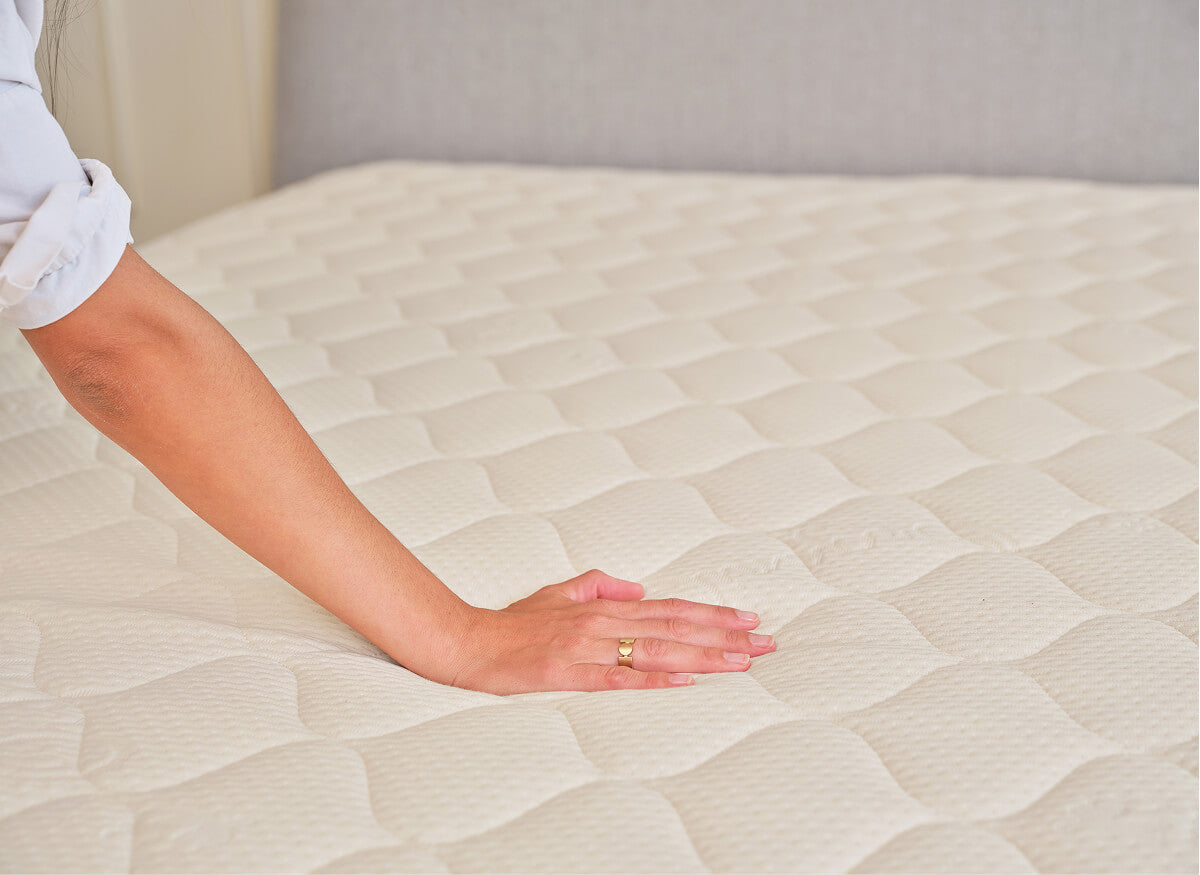
Here at Medley, we believe in investing in the things you use most, so look no further than the piece of furniture we sleep on every night. We spend about a third of our lives snoozing, so it’s worth taking the time to find the healthiest, most comfortable options out there.
Two widely-discussed choices on the mattress market today are natural latex and memory foam. While they are often bunched into the same conversation, these two options couldn’t be more different in their makeup, their feel, and their durability.
You may already know, here at Medley, we’re partial to organic natural latex. Today, we’re breaking down the real differences between natural latex and memory foam mattresses. We’ll walk through exactly how these two materials stack up, and how one choice comes out on top for the comfort-focused, health-conscious, and eco-minded sleepers.
Organic Natural Latex vs. Memory Foam: The Basic Differences
At first glance, natural latex and memory foam are both materials used in the making of supportive and contouring mattresses. But, these two materials are worlds apart in their origins and chemistry.

Natural latex is a plant-based material, and it starts through harvesting the sap of rubber trees (Hevea Brasiliensis), similar to maple syrup. This process, which involves making shallow cuts in the tree bark, allows the tree to continue growing and producing latex for decades, with new cuts made as old ones heal. After harvesting, the latex sap is then whipped and cured into foam using one of two methods: the Dunlop method or the Talalay method.
When natural latex is grown, harvested, and processed under strict organic guidelines, it can then be certified by the Global Organic Latex Standard (GOLS), guaranteeing a petroleum-free, low-tox material all the way from tree to mattress. You can learn much, much more about natural latex in our Natural Latex, Explained blog post right here.
When turned into foam, natural latex is a highly elastic, super resilient material that offers a plush, dense feel with absorbent support. Similar to memory foam, natural latex mattresses resist motion transfer, so if you’re sleeping next to another person, you can count on a bounce-free snooze. As a neat bonus, it's also naturally resistant to mold, mildew, and dust mites and, unlike many other types of foam, does not absorb moisture or heat.
Memory foam is a man-made petroleum-based material made from polyurethane. It's processed with additional chemicals to increase its density and give it that signature sinking, body-hugging feel. It’s a viscoelastic material: it has both viscous (slow-flowing, like honey) and elastic (springy, like a rubber band) traits. Memory foam also softens in response to body heat, which is what creates the "memory" in memory foam: it holds an impression of your body, then slowly springs back once you get up.
To recap, one is a natural substance tapped from a tree, and the other is a manufactured plastic material. This one distinction is the root of nearly every difference between these two mattress choices.
What Are the Main Differences Between Organic Natural Latex and Memory Foam Mattresses?
These two materials not only differ in what they’re made of, but also in how they feel to sleep and lounge on. Here's how they stack up across the questions we hear most often:
What is the feel of natural latex vs. memory foam?
Beyond their natural and man-made origins, natural latex and memory foam diverge in feel, function, and longevity. Natural latex has a balanced, responsive bounce-back: press into it and it springs back quickly. Memory foam has a slower response time: press into it and it will hold that shape for a couple seconds before reverting to its original state.
Which is more durable?
When it comes to durability, natural latex is the clear winner over memory foam. Because of its innate spring-back properties, natural latex will inherently resist impressions with use and can maintain its original shape for over 20 years. Memory foam, especially lower density and lower quality versions, is more prone to permanent body impressions, softening, and sagging. Compared to the general 8-10 year lifespan of even high-quality memory foams, natural latex wins out.
Which is better for hot sleepers?
If you run warm at night, natural latex is going to be your best friend. Natural latex has a unique, open-cell structure which allows air to ventilate through the material, so warmth has somewhere to go instead of settling between your body and the mattress.
Memory foam's dense structure does the opposite. It was designed to absorb and hold body weight, which is part of what creates that molding, sinking feel. This also means that memory foam mattresses can feel noticeably warmer. Some mattress manufacturers have introduced gel-infused or open-cell memory foam to help address this concern for hot sleepers – synthetic, thermally conductive microbeads or liquids – but even with those tweaks, natural latex remains the more temperature-neutral of the two.
Which is better for pain management?
The answer to this question will depend on your own body and preferences, and while there isn’t a single, universal answer, some helpful distinctions could help find the best option for you. Memory foam offers a deeply contouring sleep experience, which can lead to pressure relief, especially for those who like that cradled feeling. Its ability to retain heat could also be a benefit to some pain sufferers.
On the other hand, natural latex offers more balanced, pressure-free support that gently contours to your body without letting you sink too deep. This works well for anyone who wants support without feeling “stuck” in your mattress. If you’re seeking a totally natural option, but hope for more softness, you can also consider a wool topper. So luxe!
Is a natural latex mattress okay for latex allergies?
As a general rule, if you have a latex allergy through skin contact, you should be safe to live with a natural latex mattress. Since the latex mattress core should be wrapped in multiple layers of wool and cotton, there should not be any direct contact with the latex itself. For those with respiratory latex allergies, while they are considerably rare, it’s best to consult with a medical professional before bringing a natural latex mattress into your home.
Certifications and Sustainability
Just like with sofas and sectionals, not all latex (or memory foam) is created equal, and certifications are your best tool for cutting through generic, green-ish marketing claims.
Which certifications should I look for in a natural latex mattress?

Global Organic Latex Standard (GOLS): This is the gold standard certification for organic natural latex. To earn the GOLS certification, natural latex must contain a minimum of 95% certified organic raw material, with the remaining 3–5% accounting for the essential processing additives (mostly sulfur and zinc oxide) required to turn liquid latex into a usable foam. GOLS certification also verifies fair labor practices and responsible wastewater treatment.
Without a certification like GOLS, it's difficult to know whether a "natural latex" mattress is truly organic, or a blend cut with synthetic latex and fillers to save on cost. When in doubt, always ask the brand directly for certification details.
OEKO-TEX Standard 100: This certification is often applied to the wool and/or cotton layers that wrap a latex mattress core. OEKO-TEX screens for 100+ harmful substances across 17 chemical groups, including flame retardants, formaldehyde, and heavy metals.
Which certifications should I look for in a memory foam mattress?

CertiPUR-US®: If you're comparing a latex mattress to a memory foam option, look for the CertiPUR-US® certification, which ensures that synthetic foam is made without flame retardants, formaldehyde, phthalates, heavy metals, and ozone depleters, and ensures low VOC emissions. CertiPUR-US certifies that a foam is less toxic, not that it's natural or plant-based.
GREENGUARD Gold: This certification verifies low chemical emissions for improved indoor air quality, useful for evaluating any finishes, adhesives, or fabric treatments used in mattress construction.
Which is the most sustainable choice?
If sustainability is your priority, you’ll be hard-pressed to find a more eco-friendly option than natural latex. Starting as a plant-based material tapped from rubber trees, natural latex requires no harsh chemicals to produce and doesn't harm the tree, allowing it to keep producing sap for decades. After a few decades, when a tree stops producing usable latex, the wood from the tree itself can start a second life in furniture and construction.
Memory foam, by contrast, is a synthetic, petroleum-based product from start to finish. It's manufactured from fossil fuels, doesn't truly biodegrade, and can off-gas volatile organic compounds (VOCs) into your home, especially when new, and especially if the memory foam doesn’t carry a quality certification.
If sustainability, indoor air quality, and long-term durability are priorities for you (and if you've read this far, we're guessing they are), then GOLS-certified organic natural latex is the more environmentally responsible choice by a wide margin.

The Bottom Line
Don’t get us wrong: memory foam has its place! Memory foam mattresses are widely available, come in a range of price points, and offer a slow-sinking contour that is genuinely comfortable for some sleepers. But, if you're looking for a mattress that sleeps cooler, lasts significantly longer, avoids petroleum-based materials and off-gassing, a natural latex mattress is the clear winner.
At Medley, our Organic Latex Mattress is made with 100% GOLS-certified organic Dunlop natural latex and wrapped in protective layers of soft, OEKO-TEX Standard 100 certified wool and a certified organic cotton cover for extra comfort. We also back our mattress with a 20-year warranty (seriously). Overall, it's a long-term investment in better sleep, better indoor air quality, and a smaller footprint on the planet, all without asking you to compromise on comfort.
Once you've slept on organic natural latex, you'll understand why we (and a lot of very happy snoozers and sleepers) never want to go back.














Leave a comment
All comments are moderated before being published.
This site is protected by hCaptcha and the hCaptcha Privacy Policy and Terms of Service apply.